How Heads-Up Blackjack Works
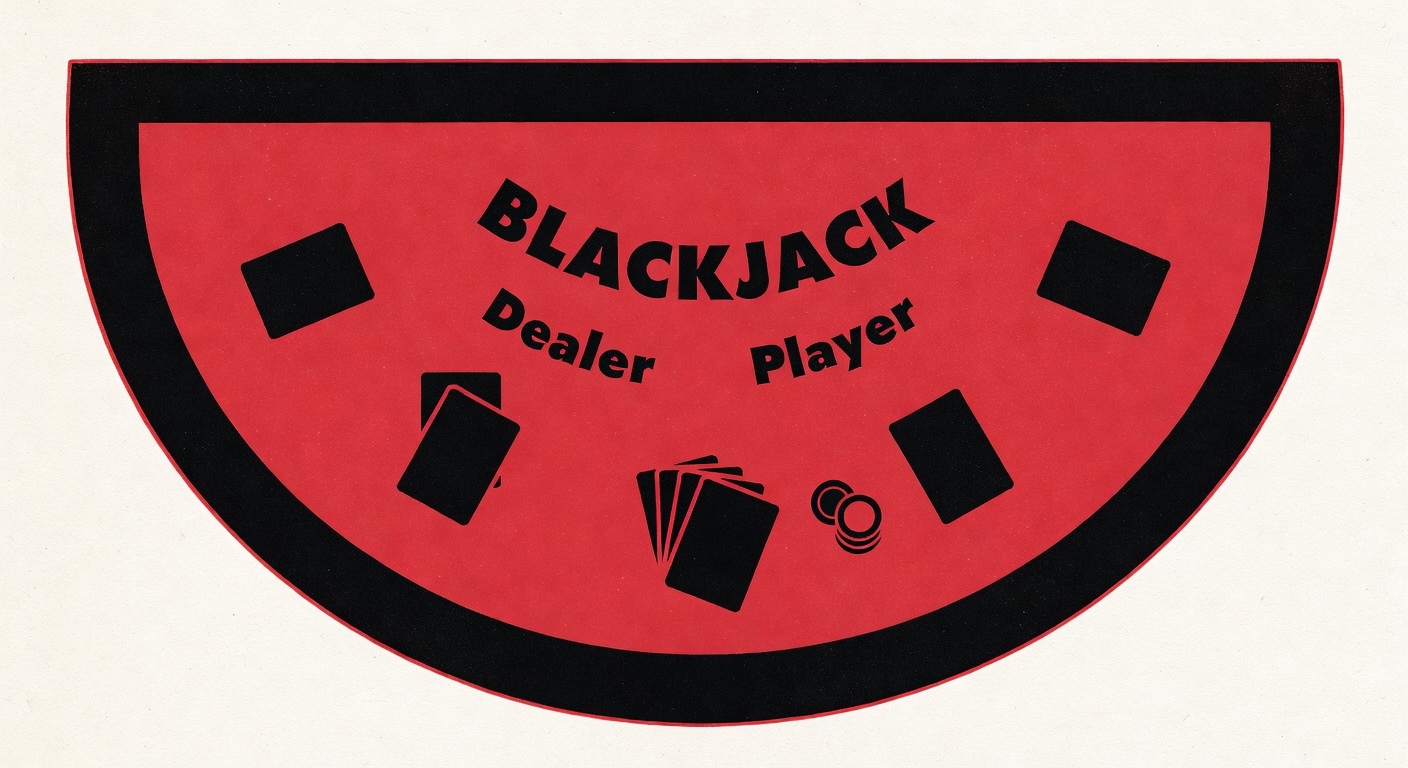
Heads-up blackjack is a tournament format where two players compete directly. Each player makes decisions independently, but the key difference from a regular blackjack table is that you can see your opponent's hand before you make your hit-or-stand decision on yours. This is not how casino blackjack operates. In a casino game, you act first, the dealer acts second, and you never see the dealer's hole card until the hand resolves. In a tournament setting, the rule structure is different. Each hand begins with both players receiving cards. The outcome is determined by who comes closer to 21 without busting.
Traditional blackjack basic strategy was designed by mathematicians using computer simulations against a dealer playing fixed rules. The dealer must hit on 16, stand on 17. A player trying to maximize long-term profit follows basic strategy to minimize house edge. In heads-up play, none of that applies. You are not playing against a mathematical abstraction. You are playing against a human opponent whose decisions you can predict, counter, and exploit.
The Psychology of Heads-Up Play
One opponent. One decision-maker. You can watch them fold with weak hands, chase draws with marginal holdings, play tight or loose. In a six-player blackjack game, you gain no information from your opponents. They have no choice in the game. They either bust or they do not. In heads-up blackjack, you gather data on how your opponent assesses risk.
Many recreational players become passive in heads-up formats. They expect they should defer to the stronger player or follow a published strategy. This is a mistake. A player who understands their opponent's tendencies can exploit gaps in reasoning. If your opponent always stands on 12 against your weak cards, you can double down on 11 more aggressively. If they hit 17, you can be more cautious.
Betting Patterns and Stack Management
You manage a bankroll across multiple hands. A standard tournament might run 20 hands. Each hand awards or deducts chips based on the outcome. Your goal is to accumulate chips relative to your opponent, not to achieve some absolute chip total.
This changes your risk calculus. On hand 15 of 20, if you are behind in chips, you should be willing to take marginal risks that would be mathematically poor in a static game. You are playing toward a target. A hand that costs you 50 chips when you are already ahead is worse than a hand that costs you 100 chips but gives you a 40% chance to break even. Your decision threshold shifts based on your position in the tournament.
What Changes From Casino Blackjack
Doubling down becomes more aggressive in heads-up play. If your opponent shows weakness (stands on low totals, hits pat hands), you can double on hands like 9 against their 6. In casino blackjack, you would never double 9. Against a dealer following fixed rules, it is mathematically wrong. Against a player who does not always make the mathematically correct move, it is profitable.
Splitting pairs also changes. You split 4s and 5s more often in heads-up play if your opponent is not aggressive. You might split 10s in late tournament spots when you need to recover chips quickly.
Insurance becomes relevant in a way it never is in casino play. If you know your opponent will take insurance on weak hands, you can position yourself accordingly. If they never take insurance, you never need to consider it.
Tracking Your Opponent
You have finite hands to learn your opponent's patterns. Keep simple mental notes. Do they hit stiff hands (12-16)? Do they double only on the standard spots (10 and 11) or more liberally? Do they split pairs? These tendencies establish a model of their play. Once you understand their range, you exploit it.
The player who wins heads-up blackjack tournaments is often not the one who memorized basic strategy best. It is the one who spent more time watching opponents and less time thinking about abstract mathematical probabilities.