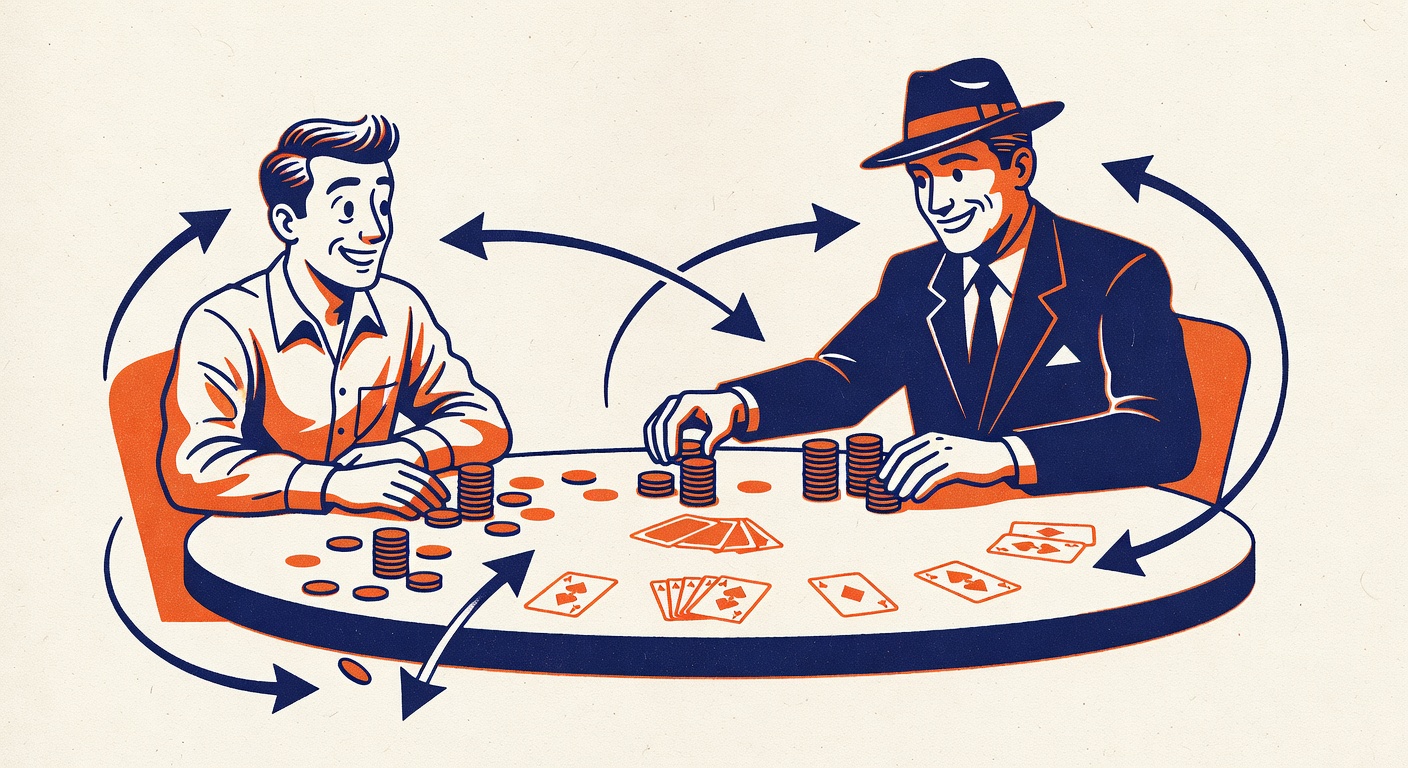
The recreational player sits down at the poker table. He has watched poker on television. He has read maybe one book about poker. He thinks he understands the game. He does not.
He bets his big hands aggressively. He bets his medium hands cautiously. He checks his weak hands. His patterns are transparent. A professional sees these patterns immediately.
The recreational player does not understand pot odds. He does not know what implied odds are. He does not know about position or hand ranges. He plays individual hands, not the game.
This is the environment where professionals thrive.
Reading Patterns
A recreational player's tendencies become apparent within an hour. Maybe he always raises with premium hands and folds mediocre hands. You watch. You note. You exploit.
When he bets, you can narrow his hand. He is not considering your possible hands. He is focused on his own cards. He thinks poker is about the strength of your hand, not about relative strength.
You use his tendencies against him. He has a tell that he bets when he is strong and checks when he is weak. You check-call weak hands when he bets. You fold when he checks. You print money.
Position and Initiative
Recreational players do not understand position. They play loose in early position and tight in late position. A professional does the opposite: tight early, loose late.
You sit in late position. You see what the recreational player does first. He acts. You react. You have information advantage. You use it.
When you are in position, you can steal pots with weak hands. He checks. You bet. He folds. He has no hand. You take the pot. He thinks you got lucky. You know you exploited his tendency to check weak hands.
Bankroll and Bet Sizing
Recreational players often have smaller bankrolls than professionals. This matters. You can tolerate variance. They cannot.
This affects their decisions. They play tighter than they should because they are afraid of losing their stack. They fold marginal hands that should be played. They miss opportunities.
You take advantage by applying pressure. You bet marginal situations where a recreational player will fold equity. You make bets that are slightly unprofitable against good opposition, but highly profitable against weak opponents who fold too often.
The Long Term
Over hundreds of hands, the gap between your skill and a recreational player's skill expresses itself. You win. You compound your winnings. You buy in deeper. You play bigger stakes.
The recreational player loses. He rationalizes the losses as bad luck. He does not see his own mistakes. He comes back next week. You take his money again.
This is not malicious. He chose to play. You are simply better. The game rewards skill.
When the Recreational Player Learns
Sometimes the recreational player improves. He reads a book. He plays tighter. He starts thinking about position. His tendencies change.
When this happens, your edge shrinks. You notice his plays are better. You move to a different table or adjust your strategy. You find recreational players who are weaker.
This is why professionals are always looking for good games. A good game is one with profitable opponents. Once the opponents improve, the game dies. You move.
Bankroll Management
You never play over your head. You bring enough buy-ins that variance cannot destroy you. A professional might lose three sessions in a row (variance is real). You do not go broke. You absorb the swings.
The recreational player does not manage his bankroll. He plays too deep relative to his skill. He goes broke. He leaves. You find another.
Conclusion
Playing professionally against recreational players is straightforward in theory: play better poker. In practice: read their patterns, exploit their tendencies, and manage your bankroll so you can withstand variance. Over time, the math takes care of the rest. You make money. They lose it. The game rewards skill, and you have it.