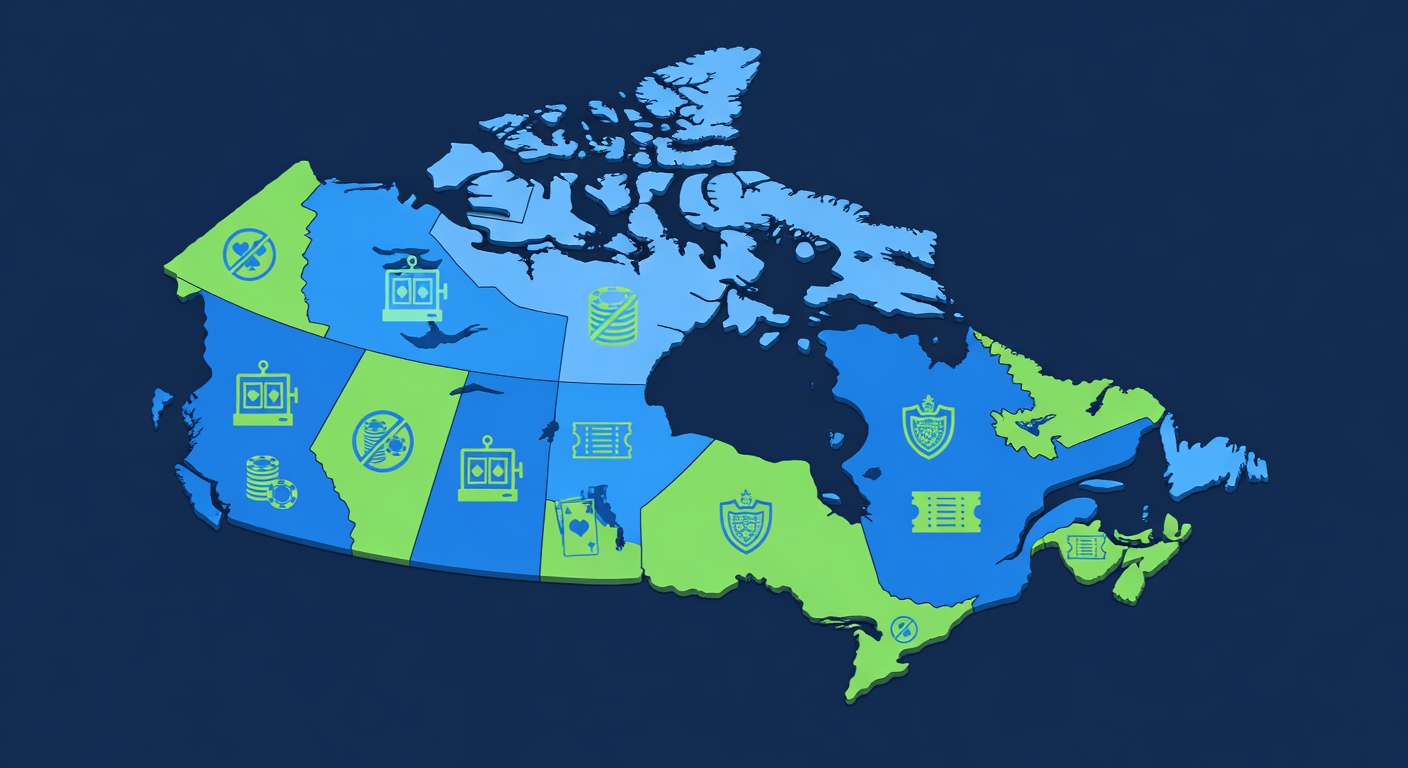
Canada's gambling regulation is a federal question answered provincially. The Criminal Code makes gambling provinces' responsibility. So Ontario operates differently from British Columbia, which operates differently from Quebec.
This is bureaucratic reality, but it has practical consequences. A play pattern that's legal in one province might be restricted in another. A bonus that's permissible in Manitoba might be forbidden in Alberta.
The Framework
Each province licenses operators and sets house rules. Most provinces have a lottery commission or gaming association that handles licensing. These bodies test games, audit casinos, and enforce responsible gambling standards.
The MGA (Malta Gaming Authority) and UKGC (UK Gambling Commission) are European regulators. But here in Canada, the Alcohol and Gaming Commission of Ontario (AGCO), the British Columbia Lottery Corporation, and similar provincial bodies are the primary authority.
This fragmentation creates regulatory arbitrage. An online casino licensed by the AGCO can operate legally in Ontario. A sportsbook licensed in British Columbia can take bets across that province. A poker room licensed by Quebec can run player-versus-player games.
But the moment an operator tries to serve multiple provinces, they hit conflicts. Responsible gambling spending limits in one province don't match another. Bonus rules differ. Advertising restrictions are uneven.
Ontario's Framework
Ontario created the Alcohol and Gaming Commission in 1998. The AGCO licenses casinos, racetracks, and gaming halls. They also regulate online gambling through iGaming Ontario, which went live in 2022.
iGaming Ontario is a licensed marketplace. Operators apply, get approved, and operate under a license held by the provincial government. This is unique. It's not a private casino market. It's a government-regulated marketplace where private operators pay fees to participate.
RTP requirements in Ontario are set. Blackjack must have at least 99.5 percent RTP. Slots must have at least 85 percent RTP. Roulette must have 97.3 percent RTP or better. These are floors, not targets.
Bonus regulations in Ontario are strict. A deposit bonus cannot exceed 200 percent of the deposit. Free spins must be capped at a maximum win per spin. Wagering requirements must be explicit and achievable.
A player who loses more than 5,000 dollars in a 30-day period gets a warning. Loses more than 15,000 dollars in 90 days and the province requires the operator to contact the player and offer self-exclusion tools.
British Columbia's Model
BC Lottery Corporation runs BC Lotto and manages gaming in the province. They license casinos, poker rooms, and horse racing.
BC's approach is slightly more liberal than Ontario's. Online gambling is less restrictive. Private poker rooms are allowed if licensed. Casinos can operate with slightly higher house edges on some games.
But BC is also more focused on problem gambling resources. The BCLC runs Responsib le Gambling BC as a public resource with treatment options and data on gambling harm.
Quebec's Autonomy
Quebec does its own thing. Loto-Quebec is the operator and regulator. They run casinos, poker, slots, and lottery. Loto-Quebec doesn't have an open marketplace like Ontario. They're the state operator, and they have a monopoly on gaming.
This means no private casinos in Quebec. If you want to play live dealer roulette in Quebec, you go to Loto-Quebec's licensed online platform. Private operators can't compete.
But Quebec allows poker differently than most provinces. Poker is considered a skill game. Private poker rooms can operate under Loto-Quebec's licensing. This creates a small ecosystem of card rooms that Ontario doesn't have.
The Gaps
Canada's regulation has gaps. Mobile gaming is permitted but lightly regulated compared to online casinos. Apps can reach Canadian players but lack the scrutiny that a licensed iGaming operator faces.
Cryptocurrency gambling sits in a grey zone. Bitcoin casinos that are unlicensed in any Canadian province operate freely. Players in Canada can access them. The regulatory body in each province lacks clear authority over crypto.
This is changing. Some provinces are exploring crypto casino licenses. But as of 2026, it remains unresolved.
Sports betting is separate from casino gambling. It's typically licensed through provincial lottery corporations. DraftKings operates in Ontario under iGaming Ontario. But DraftKings' sportsbook license comes through a different channel than its casino license.
Responsible Gambling Requirements
All provinces require operators to implement responsible gambling tools. Self-exclusion registries exist. Players can sign themselves into databases that bar them from provincial gaming systems.
But self-exclusion is province-specific. If you self-exclude in Ontario, you're banned from Ontario gaming. You're not automatically banned in BC or Quebec. You have to register separately in each province.
This is a weakness. A problem gambler who self-excludes in Ontario can drive to Quebec and gamble legally. The provinces don't share data.
Spending limits are now standard in Ontario but less common in other provinces. An Ontario player can set a deposit limit or loss limit. The operator enforces it. Other provinces are slower to adopt these tools.
For Players
If you're a Canadian player, your regulatory experience depends on where you are. Ontario players have the most stringent protections. British Columbia players have moderate protections. Smaller provinces might have less oversight.
The advantage is licensing. An operator licensed in iGaming Ontario is vetted. They've undergone financial audits. They've been tested for fairness. That's not true for an unlicensed operator.
The disadvantage is choice. You're limited to licensed operators in your province. If you want to play at a specific online casino and it's not licensed in your province, you technically can't.
In practice, enforcement of cross-border play is light. A Canadian player accessing a Curaçao-licensed casino is technically violating regulations in some provinces. But the province can't easily pursue it. The operator isn't licensed locally so prosecution is slow.
The Trend
Canadian provinces are moving toward openness. More provinces are creating iGaming models like Ontario's. More are adopting responsible gambling tools. More are working on harmonization so that self-exclusion works across provinces.
But they're moving slowly. Federal coordination would help. Currently, each province negotiates with operators independently. A unified Canadian gambling license would reduce this duplication.
That's not happening. Canada's federalism means gambling regulation will remain a patchwork. For better or worse, that's the structure players have to navigate.