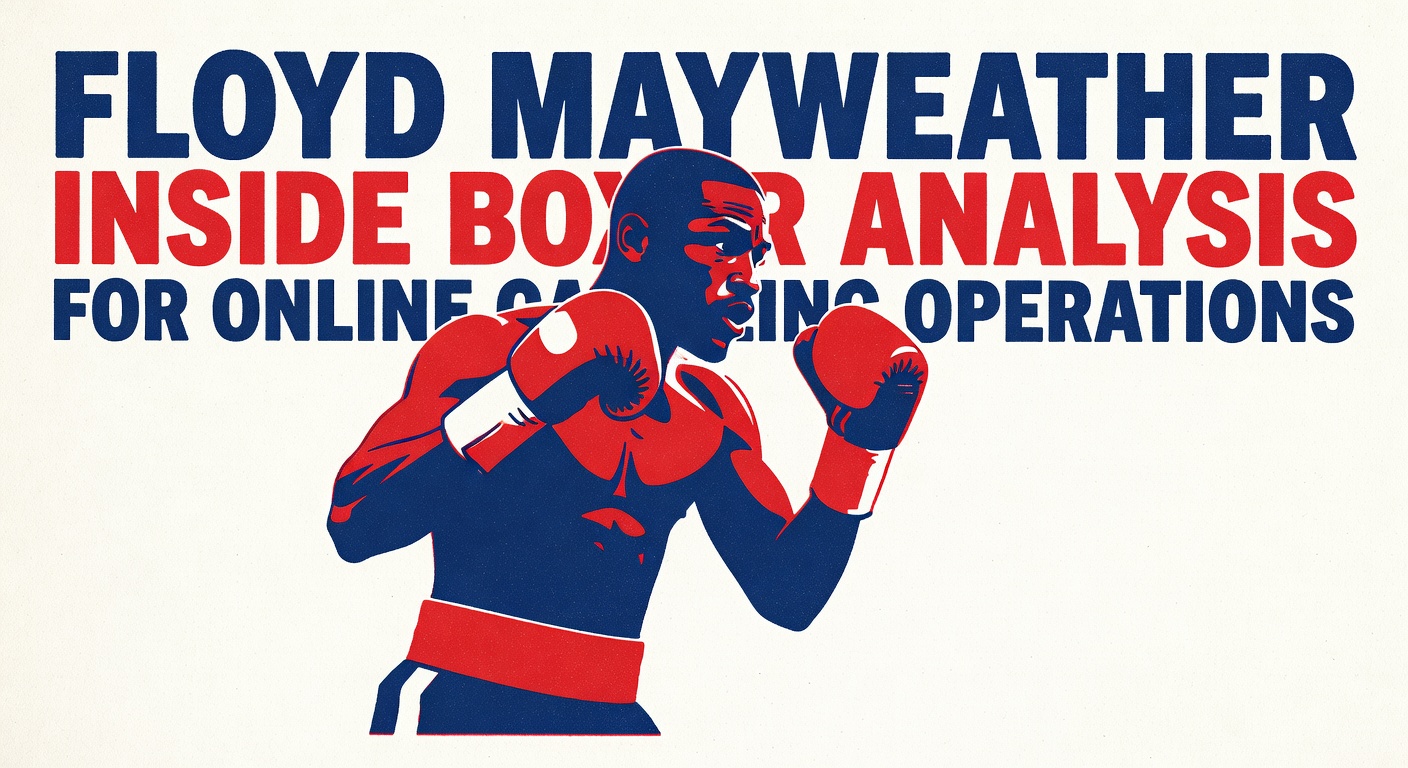
Floyd Mayweather Jr. is a man who made 1.1 billion dollars punching people. He is also a man who has posted sports betting slips on Instagram showing six-figure wagers on NBA games. This is not a complicated transaction. Money goes in. Numbers go on a screen. Most of it comes back out, except the part that doesn't.
The slips themselves are instructive. Mayweather posts them like a man who has solved a puzzle that everyone else is still looking at. Parlay tickets worth $100,000 that cash for $240,000. A casual Thursday evening where he staked half a million on a single football game. The tone, if slips have tone, is pleasant. These are not the desperate tickets of a man chasing losses. These look like the wagers of someone who believes he has an edge.
He probably does not. This is the quietly funny part. Mayweather's boxing record stands at 50-0. His sports betting record is not made public. If it were, the mathematics would look different.
The Aesthetics of Action
There is something specific happening when a person with genuine wealth posts their gambling activity. It is not, as some imagine, the swagger of a winner. It is the behavior of someone who has confused betting with winning. Mayweather has done something extraordinary in combat sports. He has controlled outcomes through superior skill and discipline and an almost supernatural ability to read his opponent's next move. Sports betting rewards none of these things. The line moves. The model adjusts. The house has hired people whose entire job is to ensure that people like Mayweather lose money at exactly the rate that makes them want to keep playing.
The slips get posted because they landed. Yesterday's $240,000 winner will be balanced by next month's $400,000 loser, and nobody posts that one. The human memory has a built-in skew toward recent wins. Mayweather's Instagram is his highlight reel, and highlight reels are lies.
His bankroll is large enough that variance does not scare him the way it scares ordinary people. A $100,000 loss that would disable most American households is to Mayweather what a coffee is to you. Replaceable, almost unnoticed. This is the actual difference between Mayweather's betting and your betting. He can afford to be wrong much longer than you can. Eventually, though, wrong still costs money.
The House Line
Sportsbooks employ statisticians, not for fun, but because games have measurable outcomes and those outcomes are worth quantifying. A team's running back has a 73 percent chance to go over 85 yards rushing. This probability has been tested against millions of dollars of wagered capital. The line reflects that reality. If Mayweather believes he can beat it, he is believing something that contradicts five hundred million dollars of data that says he cannot.
What Mayweather can do is what rich people do best: afford to be wrong. He can post one $240,000 win for every three $100,000 losses and his net position is still positive. For him, it is a hobby that happens to have a cost. For the person who sees the slip and thinks they have found a strategy to emulate, it is a slowly draining account and the sense that they are almost getting it right.
The box records Mayweather's wins with perfect clarity. The losses do not photograph as well. A parlay ticket that came apart on the final game is not the kind of thing you frame for Instagram. So the feed shows only the slips that worked, which is how you end up believing that a man who spent his life winning fights has also found a way to beat the statistical consensus of modern sportsbooks.
He has not. He simply has enough money that his losses do not show.
The Arithmetic
A $500,000 wage on a football game with -110 odds requires the underlying bet to win 52.38 percent of the time just to break even. Mayweather's slips show him wagering on outcomes that he assesses have favorable odds. If those assessments were correct more than 52 percent of the time, he would be one of the most predictive humans on the planet. He is not. He is a boxer. The fact that he has money does not make him a statistician.
What he is, is visible. Every slip is a tiny window into the thinking of someone with resources but no special insight into sports. A person watching him might think there is money to be made in betting. A person with actual training in statistics would see something else: a cautionary example of how wealth creates the illusion that decisions are working when they are only sustainable.
The slips get real attention because Mayweather is legendary. The mathematics that underlies them are not interested in legend. A probability is a probability. The house sets lines not on who is famous but on what makes money. Mayweather might beat some people. He beats nobody who works for a major book.
He is 50-0 in boxing and probably worse than random in sports betting. The slips tell you something he may not have considered: these are not the same game.