Back in 2014, when I was getting proper with crypto, esports was still a closed loop. You had a few sportsbooks that listed Counter-Strike matches. The odds were gapped wide. The liquidity was nonexistent. You'd place a bet and wait three days to find out if anyone else agreed with your thesis.
Now, esports is one of the thickest markets in online sports betting. You can find matches for CS2, Dota 2, League of Legends, Valorant. The liquidity is legitimate. The odds move. The smart guys take it seriously.
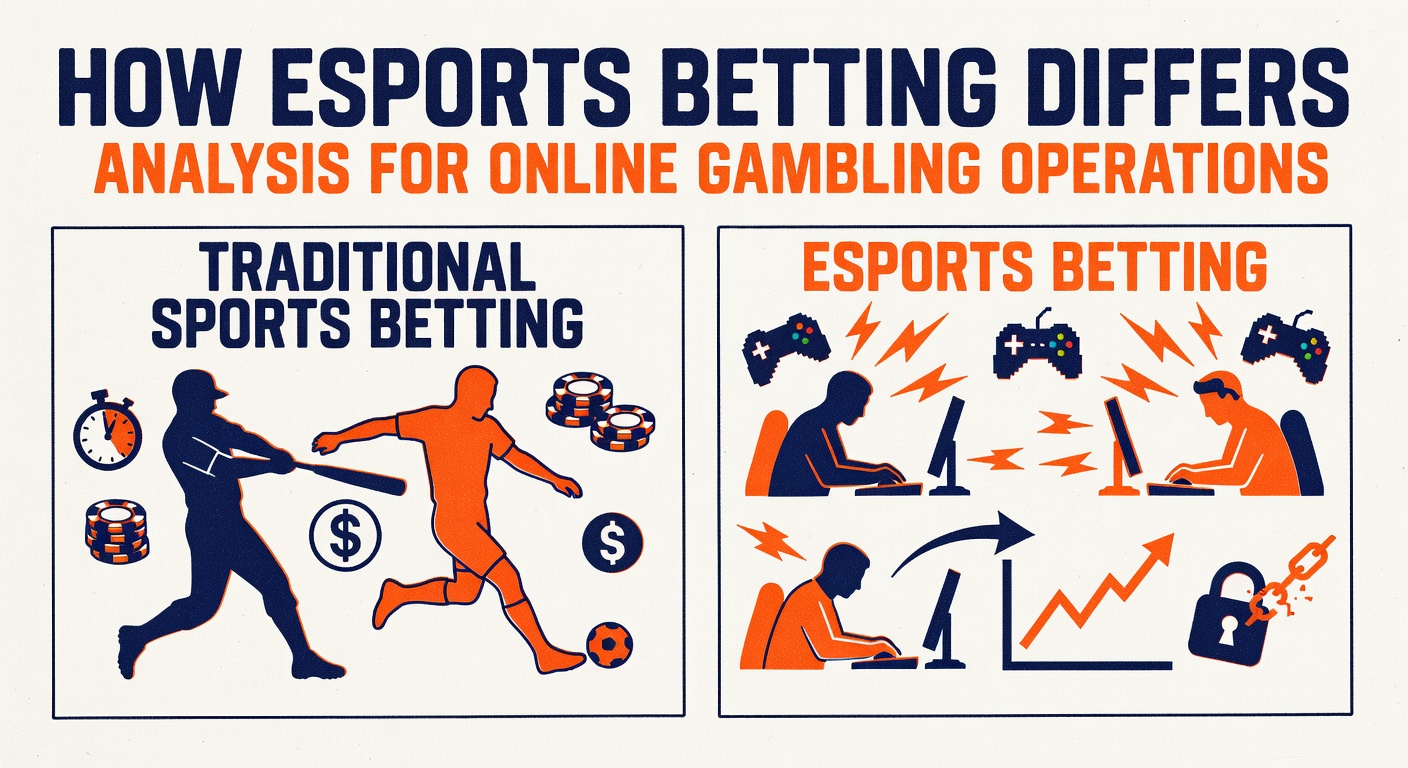
But it's still completely different from traditional sports betting, and if you treat it the same way, you'll lose money systematically.
The Information Advantage Is Inverted
Traditional sports betting: you have team rosters, historical performance, injury reports, weather, home-field advantage, public perception biases. The information is symmetric between bettors. The smart bettors aren't smarter because they know something secret about the Patriots offensive line. They're smarter because they process public information better.
Esports betting: the game state is 100 percent transparent and changes instantly. You can watch a player's mouse movements. You can track a team's economy. You can see the fog-of-war information. But you have to understand the game deeply enough to translate mechanical observation into win probability.
A traditional sports bettor might have an edge if they understand team management and personnel better than the market. An esports bettor only has an edge if they understand the game's decision tree better than the market and can evaluate player execution against that tree in real time.
The Market Structure Is Different
Traditional sports: the sportsbook posts lines, the market bets to consensus, the line moves slowly. The sharp money identifies misprices and acts on them. The book adjusts. By kickoff, the line is reasonably accurate.
Esports: the matches are short. A League of Legends match is 30 to 50 minutes. A CS2 match is 30 to 60 minutes. The line doesn't move through traditional betting demand. The line moves because the match is happening in real time and the odds are updating to game state. A team gets an early gold lead, the odds tighten. The team loses two fights, the odds reverse.
This is live betting, and the dynamics are completely different from pregame betting. You're not trying to find a mispriced pregame line. You're trying to predict the match outcome from an intermediate state. You need to understand not just what happened, but what it means given the time remaining and the team compositions.
The Player Quality Is Harder to Predict
Traditional sports: if you know a running back had 4.2 yards per carry last season, you have a baseline. That number will trend stable unless something major changed. You can forecast from history.
Esports: player performance is mechanically incredible but inconsistent. A player can be perfectly positioned but fail a skillshot. A team can have superior macro understanding but get caught on a bad recall. Individual play variance is higher because execution has more degrees of freedom.
Also, esports players are younger, more prone to burnout, more likely to take breaks or switch teams. The career trajectory is unpredictable. A player who was a top-ten talent two years ago might be completely washed. Or they might stage a comeback.
The Actual Edge
If you want to have a real edge in esports betting, you need to be deeply inside the game. You need to understand draft impact as it translates to win probability. You need to know a team's read on the meta. You need to understand which player matchups are use points. You need to watch enough matches to have a genuine model of how those factors compound.
Traditional sports, you can read some articles and understand the basics. Esports requires real depth of game knowledge. Most casual bettors don't have it. They treat esports like NFL betting, look at the odds, make a guess, and get punished.
The Risk You're Actually Taking
When you bet esports, you're not betting on player talent alone. You're betting on execution under pressure, team communication, coaching decisions, meta-game alignment, and patch-induced shifts in champion value. These are all higher-variance vectors than what you see in traditional sports.
The sharp esports bettors know the game. The sharp traditional sports bettors know the information landscape. If you're moving between the two without understanding the structural differences, you're a mark.