There is a difference between the hands you remember for their size and the hands you remember because they broke something inside you that day. I watched Johnny Chan call a river bet with nothing but queen high at the 1989 World Series. He looked across the table and something passed between them, player to player, a conversation that had nothing to do with cards.
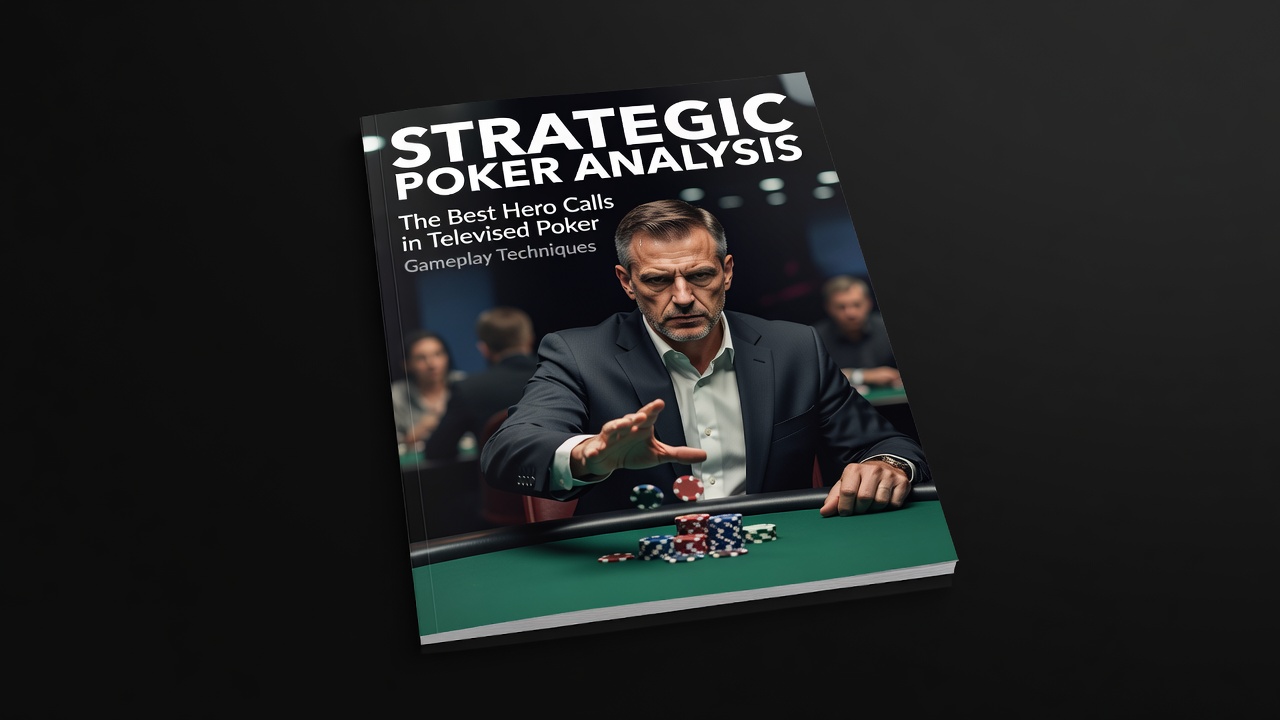
The hero call is a particular kind of faith. You sit with cards that lose to almost everything in your opponent's range. Your hand cannot beat a legitimate strong hand. It cannot beat value. And yet. You call.
The Weight of Seeing
This happens usually in deep tournaments, when two players have spent hours reading each other like books. They know each other's rhythms. They know which bets are strength and which ones are camouflage. Dan Colman called a massive river overbet with king-six at the 2014 World Series main event. The bet was approximately his entire stack. His hand ranked somewhere between nothing and worse than nothing. He called and saw pocket eight. He won the hand because his opponent was bluffing with a hand that beat half the air, and that matters.
The public narrative says poker is math. Range, equity, position, bet sizing formulas. But the hero call happens in the margin where psychology meets mathematics. A player becomes convinced that the pressure applied by their opponent contains more fear than strength. They recognize a human being, not a strategy profile.
Yvonne Bigot called with a broken ace at the EPT main event. Erica Schoenberg made a famous call at high-stakes games with mere queen-jack. These women sat with cards that belonged in the muck and said, "I believe you are lying to me." That takes something poker does not teach you. The game can teach you ranges and bet sizes. It cannot teach you how to listen to silence.
The Mathematics of Doubt
Expected value mathematics says some hero calls are profitable over time. If you face an opponent who bluffs with sufficient frequency in a particular spot, calling with weak hands has positive expectation. The math is real. The problem is that the math requires a precision of observation that breaks most human minds. You need to know your opponent's exact bluffing frequency, the exact composition of their bluffing range, your own hand's precise equity against that range.
When Phil Hellmuth called with seven-three at the World Series, observers focused on the outcome. Hellmuth saw Doyle Brunson reach for chips in a particular way. He had played Brunson enough to recognize the gesture. Hellmuth's call was not based on pure statistical calculation. It was based on a person reading another person at a moment when both were tired and stressed and human.
The best hero calls are not desperate guesses. They are conclusions arrived at through observation so careful that onlookers mistake them for luck.
The Costs of Being Wrong
Yet here is what the television commentators do not say with sufficient force: most hero calls are wrong. The mathematics demand it. You are calling with weak cards, which means you lose most of the time. The hands that make it to poker television are the ones where the hero call worked. The universe of hands where someone called with queen-nine and got bluffed is infinite. We never see them. We see Hellmuth. We see Chan. We see the hands that became legendary.
Mikka Tokens made a hero call that cost him his tournament life at the World Series of Poker. He called with nearly nothing against a player he knew to be capable of running a bluff. He was right about the bluff. He was wrong about the timing. His opponent had actually made a full house. Tokens lost anyway. But in the hand that made the highlight reel, some player made the same call with the same cards and the same tell, and won the tournament.
This is the bargain of the hero call: you trade certainty for hope, bankroll for information, a small death for the possibility of grace. And sometimes grace arrives.