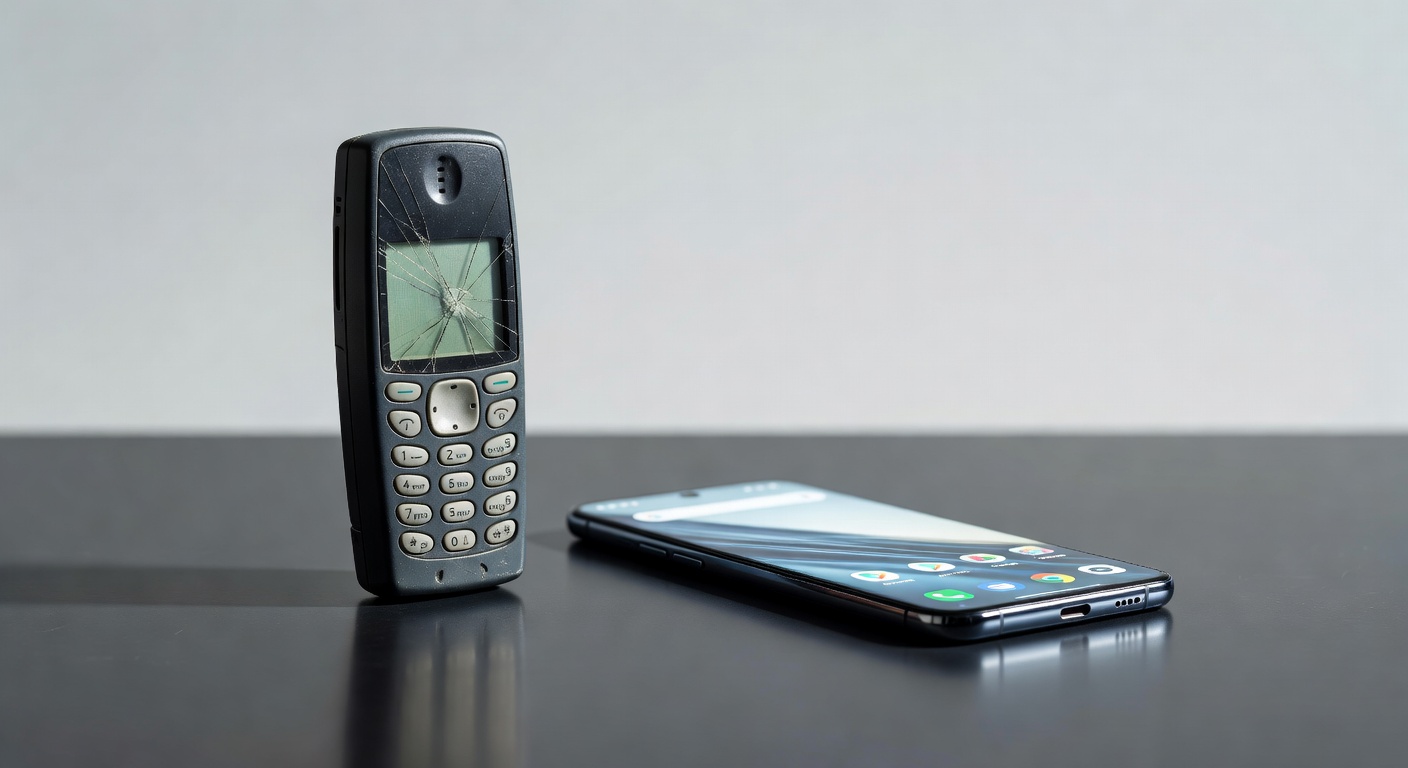
A gentleman from Geneva asked me the question last winter, over a quiet cognac in a corner of the lounge. He had a handset he had carried for six years, a modest thing by any standard, and his preferred baccarat app had, in the course of a routine update, simply refused to open. He presented the problem to me as if it were a failure of etiquette on the part of the developer, which in some sense it was.
He was a patient man. A patient man of a certain age, of a certain discretion, the sort who brings the same fountain pen to a meeting he has brought to every meeting since 1998. He believed, with the quiet certainty of such men, that the things that worked once ought to work still. I poured him a second cognac and explained to him what had happened, as best I could, without making him feel that his phone, or his fidelity to it, was the problem.
Let me tell you what I told him.
The casino app he had been playing was built on top of a framework that had updated three times in the intervening years. The framework's developers, a company in Gothenburg whose name I will not mention, had quite reasonably decided that supporting three generations of iPhone hardware alongside three generations of Android hardware was consuming more of their engineering budget than any particular player was worth. They had issued a deprecation notice some months prior, which arrived in an email that the gentleman from Geneva had almost certainly deleted without reading, and then they had made the change.
The framework in question now required a minimum operating system version that the gentleman's six-year-old device could not be upgraded to. Not because the hardware was inadequate in any physical sense. The device still made calls. It still sent messages. It could still play, if one insisted, the older version of the app that had been installed before the update, and for a brief period it did. But once the casino's servers updated their handshake to match the framework's new security protocols, the older version could no longer authenticate. The door, such as it was, had been politely closed.
The mechanism, as simply as I can put it
A modern casino app does not run on the phone the way an older program might have. It is, in most cases, a shell. The shell contacts a server. The server verifies the player's identity, confirms the player's jurisdiction, establishes a secure channel, and then begins sending the player's movements and receiving the game's responses. Every step in this exchange is governed by protocols that have, quietly and continuously, been revised upward over the past decade.
TLS 1.3, for instance, became standard sometime around 2020. Phones that cannot support it cannot establish the secure channels the casino requires. Apple and Google, to their credit I suppose, have removed TLS 1.0 and 1.1 from their recent operating systems. A phone that cannot update past iOS 12 cannot negotiate with a server that requires TLS 1.3, and a casino that has upgraded its security posture to the current standard will, as a matter of licensing compliance in most jurisdictions, refuse to accept connections from a phone that cannot meet it.
The licensing compliance point is not decorative. The Malta Gaming Authority, the UK Gambling Commission, the New Jersey Division of Gaming Enforcement, and similar bodies have issued guidance specifying minimum cryptographic standards for player session handling. An operator who serves a player on a deprecated protocol is not, strictly, breaking the rules, but the exposure is substantial enough that compliance departments have made the call to drop the older standards entirely.
This is the unromantic truth of why the gentleman's phone could not play. The phone was not old by any biological or mechanical standard. It was old by the standard the regulator had chosen to apply.
The graphics, the processor, the battery
Beyond security, there is the matter of what the app is actually being asked to render. A live dealer baccarat stream in 2025 is not the same image that the same stream was producing in 2018. Resolution has increased. Frame rates have increased. The on-screen user interface elements have multiplied: chat overlays, side-bet panels, statistics widgets, notifications, loyalty program indicators, all running simultaneously on top of a live video feed from a studio in Riga or Manila or Bucharest.
The hardware required to render all of this smoothly is not trivial. A phone from 2018 may have been adequate in its time but will, on the current generation of casino app, drop frames, pause unexpectedly, or simply refuse to render the video feed at all. The developer's testing team, whose resources are limited, will have tested on a selection of recent handsets. If the older device falls outside that selection, the experience on it will degrade in ways the developer may not have observed and will not prioritize fixing.
I should add that the battery matters as well. Older phones, whose batteries have been cycled for six years, will discharge more rapidly under the load of a streaming video game than they did when they were new. Players whose sessions were once an hour long find themselves running to a charger after twenty minutes. This is not the casino's doing. This is simply the reality of a lithium battery that has done its work.
The quiet matter of who the industry serves
There is a question I did not quite raise with the gentleman from Geneva, though I thought about it later. The industry has, over the past decade, continuously narrowed the range of devices it supports, always in the direction of newer and more expensive hardware. This is a design choice, not a necessity. A developer could, if it wished, maintain backward compatibility with older handsets. It would cost money. The money would come from the revenue generated by the players who still use those handsets.
The industry has looked at that calculation and decided, with some consistency, that the players on older devices are not the players it most wants to keep. I will not moralize about this. I will simply note that it is so.
The gentleman from Geneva bought a new phone. He does not love it. He plays his baccarat, when he plays it, with the same grace he always did, on a device that he has not quite accepted as his own. I expect this is the pattern for many of our guests. They arrive with a handset that has served them well. They leave, in time, with a new one. The casino, like the cognac, keeps flowing. The players are the ones who quietly replace themselves.
I poured him a third cognac. He accepted it. We did not speak again about the phone.