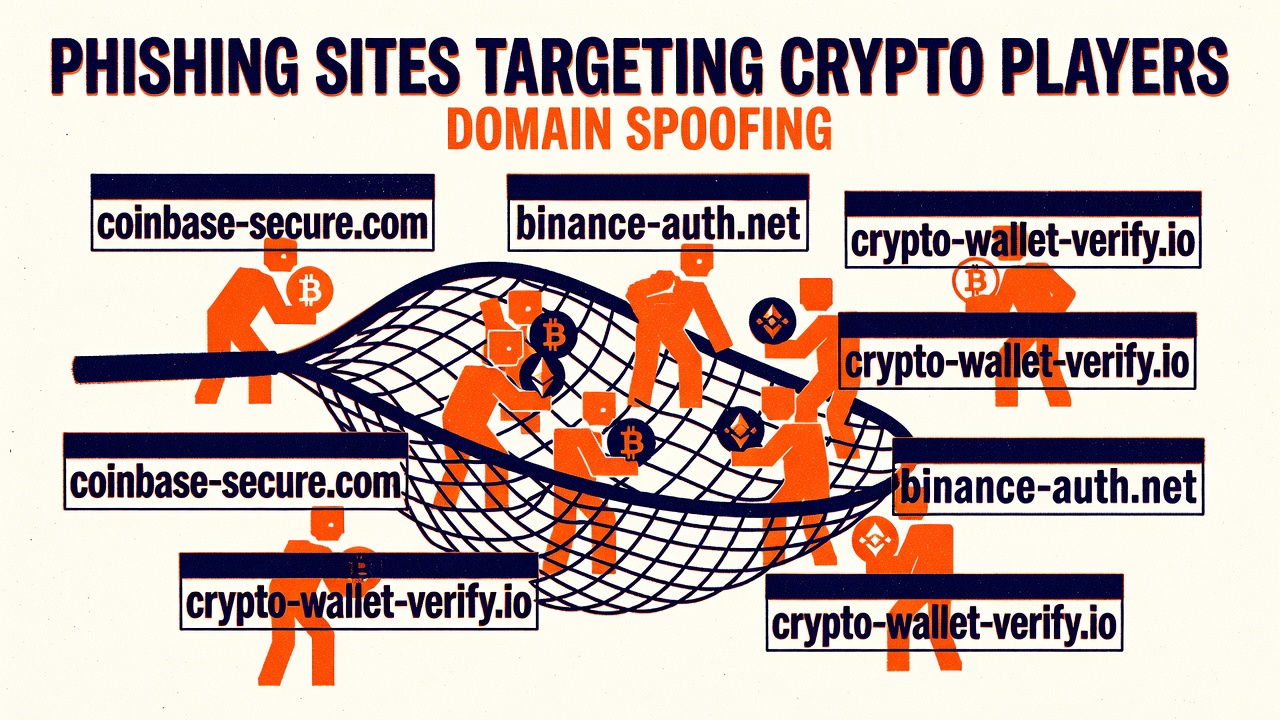
Phishing sites mimicking crypto casinos operate at scale. A scammer registers a domain one character different from the legitimate casino. Instead of legitimate-casino.com, they register legitima-casino.com. Or they rent a cheap shared hosting provider, install a cloned copy of the casino's website, and advertise it through rigged search results or compromised email accounts.
The goal is extraction of one of two things: wallet credentials or deposit funds. A phishing site can't execute the actual casino software (that requires access to the blockchain and the legitimate operator's backend). But it can collect your login credentials, your email, and your wallet's private key if you enter it. Once they have your wallet key, they've won. They transfer all your holdings to an address they control. Blockchain transactions are irreversible. The money is gone.
How do you avoid this? Start with the domain name itself. Legitimate casinos own their actual domain. They do not operate from cloaked redirects or shortened URLs. If you received a link in an email, do not click it. Go to the casino directly through your browser history or through a fresh search. Most phishing attacks arrive through email with subject lines like "Claim Your Bonus," "Account Security Alert," or "Verify Your Account." Legitimate casinos do not request sensitive information by email.
Technical Markers
Check for HTTPS and a valid SSL certificate. A legitimate crypto casino has HTTPS with a valid certificate issued by a trusted certificate authority. If your browser shows "your connection is not secure" or "certificate warning," you are on a phishing site. Close it. Do not enter any information.
Look at the URL structure itself. Phishing sites often use complex URL paths to simulate legitimacy. Instead of crypto-casino.com/login, they might use crypto-casino-login.co.fake or cryptologin.site/casino/verify. Notice the differences. A legitimate site has a clean, simple URL structure.
"If you received the link in an email, it came from a phisher. Legitimate casinos do not contact users by email requesting credentials or wallet information."
Check the registration information. Services like WHOIS allow you to look up domain registration details. A legitimate casino's domain will show company registration information with a proper address and contact email. A phishing site will show privacy protection or obviously false information. Some phishing operators use bulk domain registration services and register dozens of fake domains in one go.
Look for historical presence. Legitimate casinos have been online for years. Their website appears in wayback archives. Search for reviews on independent sites. A phishing site will be brand new, have no reviews, and appear and disappear within weeks. Run the domain through a security scanner like VirusTotal or Google Safe Browsing. These services test URLs against known malicious databases. A phishing site will be flagged.
Wallet-Level Protection
Hardware wallets (Ledger, Trezor) offer protection against credential phishing. You cannot export your private key from a hardware wallet through a website attack. Even if a phishing site collects your credentials, they cannot access the funds. You have to physically approve transactions on the device itself.
Soft wallets (MetaMask, Phantom) are vulnerable. If you grant a phishing site permission to access your wallet (by mistake), they can drain your funds. Never, ever grant wallet permissions to a casino unless you are absolutely certain of the domain and have verified it against an official source.
Some sophisticated phishing attacks attempt what's called clipboard hijacking. You copy your wallet address to send to a casino for deposits. A malicious browser extension replaces it with the attacker's address. The money goes to them instead of you. This is mitigated by checking that your wallet address matches before confirming a transaction.
KYC (Know Your Customer) verifications are another attack vector. A phishing site requests ID documents, photos of your face, proof of address. Legitimate casinos do request this. But they request it only through secure, encrypted channels with proper authentication. They do not request it in unencrypted forms or from new users immediately.
The final defense is skepticism. Casinos making offers that sound too good to be true are often phishing sites. An offer of "triple deposit bonus" or "guaranteed profits" or "you've won a prize, claim here" are classic phishing angles. A legitimate casino makes its offers clear on its main website. You do not discover them through email links or social media ads that direct you to a login page.