The most documented gambling run in history belongs to Archie Karas. It's worth studying not because it's inspiring but because it's instructive about variance, skill, and the psychology of long winning streaks.
December 1992: The Beginning
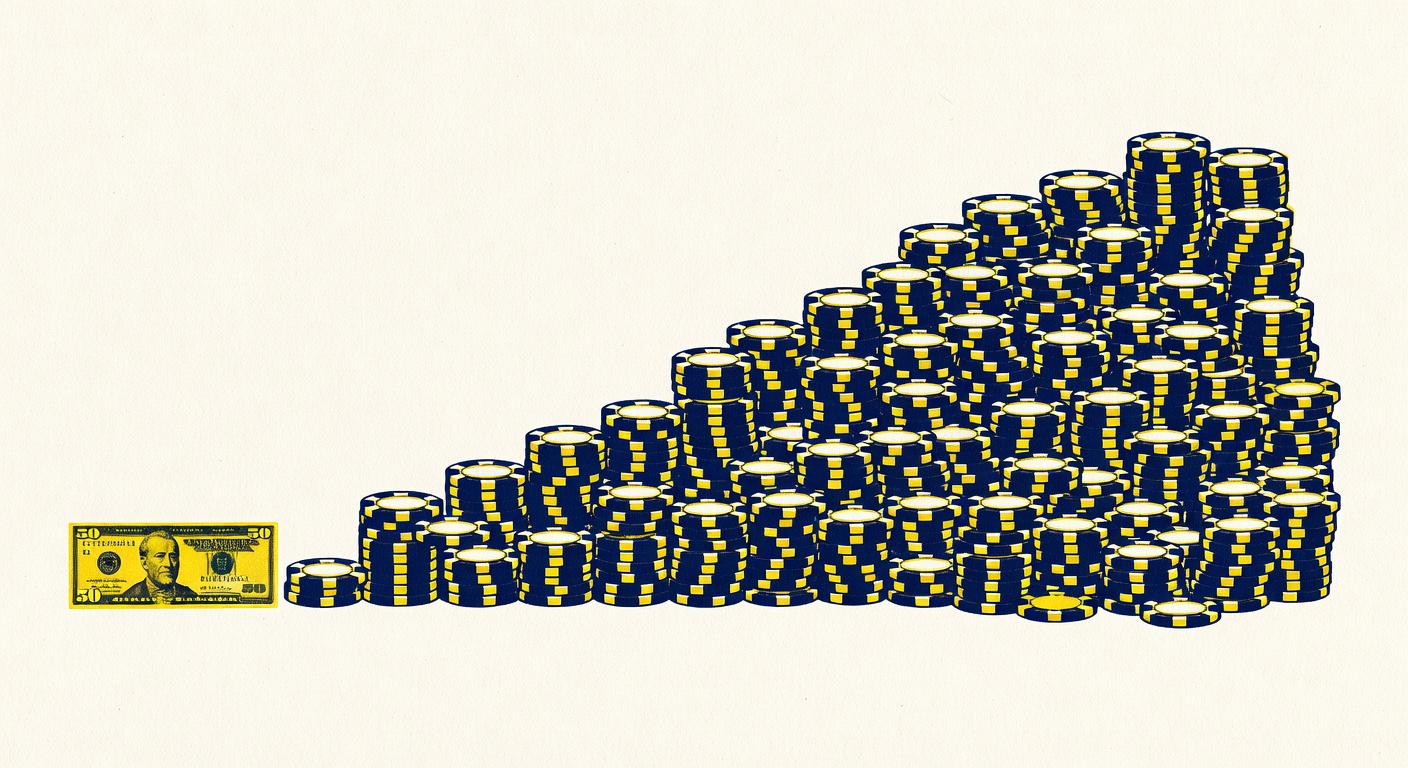
Karas walked into the Golden Nugget casino in Las Vegas with fifty dollars. He was broke, homeless, living in a friend's car. He decided to try his luck at video poker.
He won. He played video poker for months, turning that fifty dollars into ten thousand through small consistent wins.
Then he shifted to table games. Keno. Blackjack. Craps. And later, poker.
1993: The Run
For the next year, Karas won almost every significant hand. His documented wins include:
- Beating another gambler 2-1 in high-stakes craps over multiple sessions
- Winning consistently at poker in small cash games
- Expanding his bankroll to hundreds of thousands
By mid-1993, he was a millionaire. The story became legendary in Vegas. A guy who showed up with nothing, played superior poker and craps, and ran it up.
Casinos hired him to play in high-stakes games. They wanted the exposure of a winning celebrity. Karas was happy. He was playing poker against worse opponents and winning.
May 1994: The Beginning of the End
Karas started playing baccarat. He was not a baccarat expert. He was a poker and craps expert. But he had confidence from his winning streak.
He played enormous amounts against casinos. Tens of thousands of dollars per hand. And he started losing.
Not a little. Massively. Over the course of a few weeks, he lost millions.
The math explains this. In poker, skill matters. Karas was skilled. In baccarat, skill doesn't matter. It's pure chance. His skill in poker was irrelevant.
He couldn't adjust. He kept playing bigger, thinking the law of averages would correct. It didn't. It never does.
June 1994: Total Collapse
By June, Karas had lost nearly 40 million dollars. He was broke again. No house. No money. Just like 1992.
He didn't stop gambling. He continued trying to recover. He lost more.
The Psychology
Karas had what researchers call "variance blindness." He couldn't distinguish between skill-based win (poker and craps against bad opponents) and luck-based win (short-term variance in baccarat).
The winning streak became psychological proof that he was special. He couldn't lose. This overconfidence led him into games where his skill didn't apply.
When he started losing in baccarat, he experienced what's called a "loss-chasing" episode. He doubled down trying to recover. The losses compound. The more you chase, the deeper you go.
Research on gambling behavior (Dickerson et al., 1992) shows that loss-chasing is one of the strongest predictors of problem gambling. Karas couldn't stop because stopping meant accepting the loss. Continuing meant maybe, possibly, miraculously recovering.
It didn't happen.
The Lessons
Skill matters in skill games. Karas was genuinely good at poker and craps. But skill doesn't transfer to chance games. He couldn't apply poker instinct to baccarat.
Variance is real. A year of winning doesn't prove you're special. It proves you got lucky in skill games and unlucky in chance games. Both are temporary.
Overconfidence is the house's ally. The bigger you feel, the bigger you bet. The bigger you bet, the faster you lose.
Loss-chasing compounds. The moment you start doubling down to recover, you've moved from gambling to emergency financial behavior. The math gets worse from there.
Where Karas Ended Up
He was employed by the Golden Nugget as a player in their high-limit games. He was also banned from various casinos. He tried to recover for years. He never did.
His story is cautionary, not inspirational. It's a case study in how skill in one domain doesn't transfer to another, and how a winning streak can generate so much overconfidence that you take risks you shouldn't.
The most important finding: Karas didn't lose because he was bad at gambling. He lost because he was good at poker but applied poker confidence to a game where poker doesn't matter.