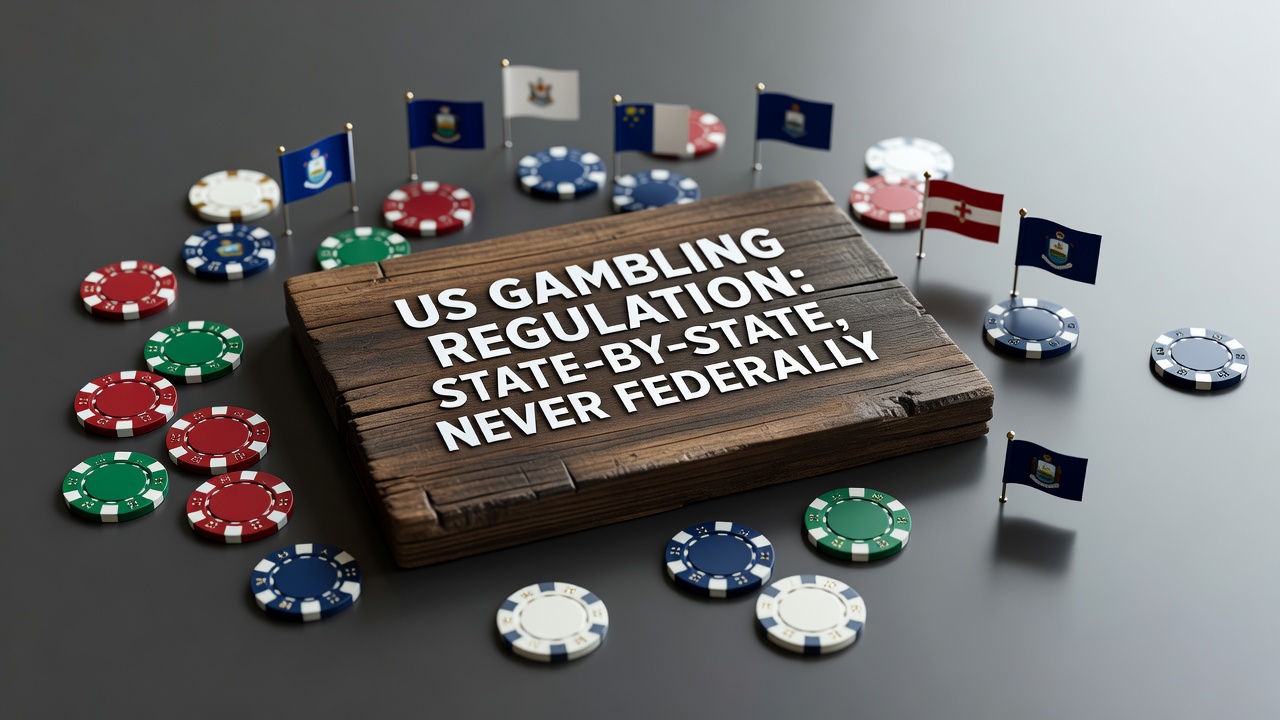
In the United States, gambling is primarily regulated at the state level. The federal government set boundaries after the 1992 Professional and Amateur Sports Protection Act (PASPA), which prohibited states from authorizing sports betting outside of Nevada and a few other exceptions. But PASPA was repealed in 2018, opening the landscape.
Today, the system works like this. A state legislature decides whether to permit online sports betting, online casinos, online poker, or some combination. If they do, they create a regulatory framework. They license operators. They set tax rates. They impose player-protection requirements. Different states made different choices.
Nevada pioneered online poker in 2013. Nevada's regulations allow online poker, but not online slots or table games. The state reasoned that poker is a game of skill, so it was appropriate to regulate. Slots and table games are pure chance, so they restricted them.
New Jersey took a different path. After PASPA fell, New Jersey legalized both sports betting and online casinos. The state now has multiple licensed operators offering slots, table games, and sports betting. The regulatory environment is permissive.
Other states took intermediate positions. Pennsylvania allows online casino games and sports betting. Delaware allows very limited online gambling. West Virginia allows online casino games. Each state made independent decisions based on local political factors.
The result is a patchwork. A resident of New Jersey can legally access online casinos. A resident of Texas cannot, not legally anyway. A resident of Nevada can play online poker but not online slots.
For operators, this fragmentation creates complexity. An operator must be licensed in each state where it wants to offer games. Licensing requires capital investment, legal compliance, and ongoing regulatory interaction. Most major operators operate in 5-15 states, not all 50.
For players, the fragmentation determines what games are available in your state. If you live in an unregulated state, you can still access offshore casinos, but you are not protected by U.S. regulation. Your only recourse if the casino cheats you is your own judgment.
The regulatory structure within each state typically includes:
A licensing authority, usually the state gaming commission or a similar body. This entity decides who gets to operate, sets conditions on the license, and enforces rules.
Taxation. Most states tax operator revenue at rates between 15-50 percent. This revenue funds state programs.
Player protections. Requirements include age verification, geolocation technology to ensure players are within state boundaries, responsible-gambling tools like deposit limits and self-exclusion, and minimum payout percentages for slot games.
A black market exists alongside the regulated market. Players in unregulated states, or those who prefer unregulated operators for any reason, can access offshore casinos. These casinos are not subject to U.S. regulation, but they may be subject to regulation in other jurisdictions (Malta, Curaçao, etc.). The legal risk falls on the player, not the operator.
The federal government has made clear that it does not intend to nationalize gambling regulation. The framework relies on state-level enforcement. The FBI and Department of Justice pursue cases against operators who violate state laws. But the primary enforcement mechanism is state-level, not federal.
Because regulation is state-by-state, interstate play is not permitted. A person in New Jersey cannot access poker with a person in Pennsylvania, even though both states have licensed online poker. Each state maintains its own player pool. This limits the size and liquidity of each state's market.
Some states have negotiated multi-state compacts. The Multi-State Poker Alliance allows operators in signatory states to share poker player pools. This increased liquidity. But each state maintains separate licensing and oversight.
For the average player, the practical impact is this: look up whether your state has legalized the game you want to play. If it has, and if licensed operators are available, you can play legally. If your state has not legalized it, you have the choice between not playing, or playing offshore and accepting the regulatory risks.
The regulatory landscape will likely continue evolving. More states are considering legalization. Congress has occasionally discussed federal frameworks, but has not passed new legislation. The current expectation is that state-by-state regulation will persist.