December 5, 2019. Thursday Night Football. Tampa Bay Buccaneers at Dallas Cowboys. The opening line from Las Vegas sportsbooks was Dallas minus 5.5. The public immediately backed Dallas. They had won their last three games. Tampa was in freefall. The line moved to Dallas minus 6, then minus 6.5, then minus 7. By ten am ET, Dallas was laying seven points. This is normal market movement. Casual bettors pushing a favorite higher.
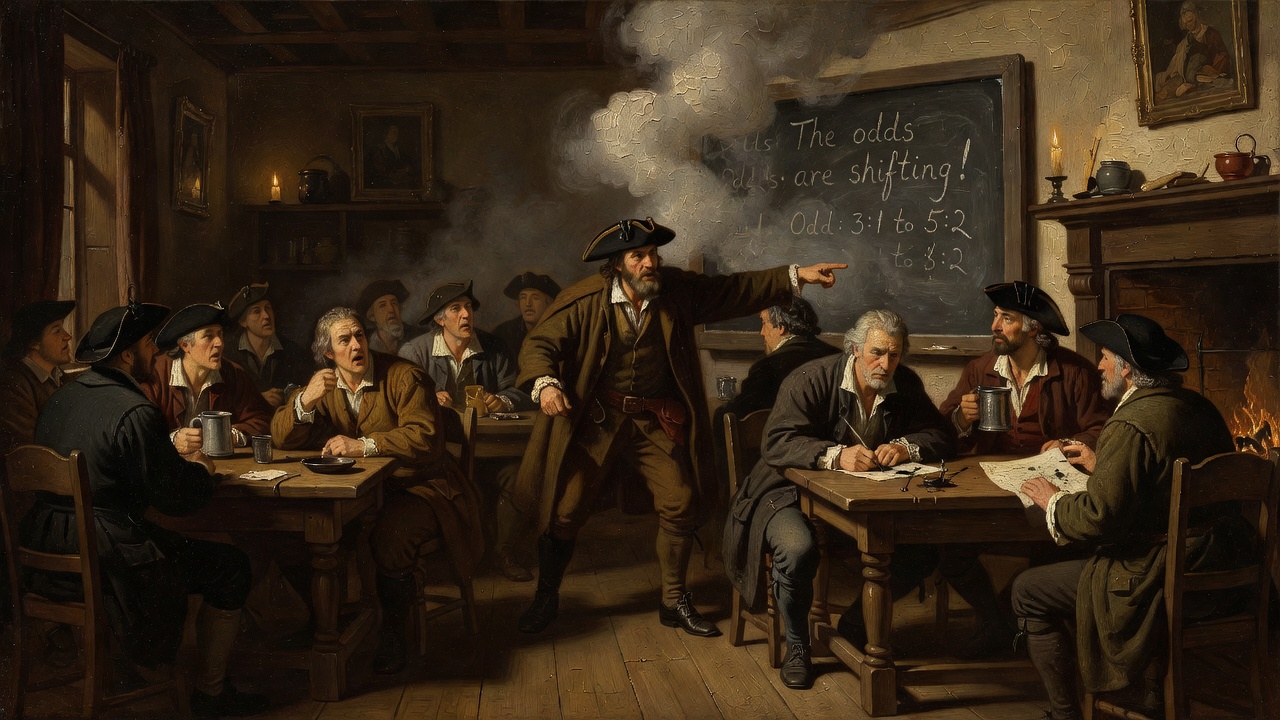
By noon, the line hadn't moved. That's when sharp money started arriving. A series of large bets came down on Tampa Bay. These were not random bets. These were coordinated, substantial positions. Within two hours, the line had moved from Dallas minus 7 to Dallas minus 5. Within four hours, it was at Dallas minus 3. This movement contradicted the initial direction entirely. The public had been pushing Dallas. The sharps had identified value on Tampa and moved the market backward.
Why did this happen? Sharp syndicates had identified something the market had mispriced. It might have been injury-related (Dallas had a defensive back out). It might have been matchup-related (Tampa's running back was undervalued in the calculation). It might have been contrarian (the public's enthusiasm for Dallas had pushed the line too far). Whatever the reason, the sharp money detected a discrepancy and acted on it at size.
The actual result matters less than the mechanism. Tampa won 19-14. The sharps had identified the correct direction. But the point is not the outcome; it is the signal. When sharp money moves a line contrary to public money, the market is recalibrating. The public had pushed the line to Dallas minus 7 based on narrative and recent performance. The sharps recognized this as emotional pricing and corrected it toward fundamentals.
The Signal in Real Time
Sharp money moves lines through volume and size. A single large bet can move a line if the sportsbook's exposure is in one direction. If a sportsbook has already accepted five million dollars of public money on Dallas, they need to balance risk. A one million dollar bet on Tampa at decent odds will move the line to attract matching action. The bet size relative to the book's position determines line movement.
"Steam moves signal that the market has repriced fundamentals. Listen to them. The sharps know something the public hasn't priced in yet."
Detecting steam moves requires real-time line shopping. A bettor monitoring multiple sportsbooks will see disparities. If DraftKings has Dallas minus 5.5 and FanDuel has Dallas minus 3, the gap indicates where sharp money has concentrated. The sharps moved FanDuel's line backward faster than DraftKings because they deposited a large amount there. Retail bettors following sharp money will chase the FanDuel line before it reaches equilibrium.
Historically, steam moves concentrated on Vegas operators. Professional bettors would place large bets at the off-strip books first, moving lines faster there than on the Strip. The Strip books operated with more balanced action and resisted moves longer. Modern steam moves across sportsbooks simultaneously because limits are higher and technology connects markets. A sharp can place large bets at five different operators in seconds.
The consequence is that steam moves have compressed dramatically. A line move that would have taken three to four hours in 2015 now takes thirty to forty minutes. Sharp money moves positions faster than it used to. But because the detection has also improved, retail sharps (semi-professional bettors) can still profit by following steam moves.
Tampa-Dallas November 2019 is a clear historical example because the move was extreme and documented. The sharps correctly identified value. But steam moves don't always work. Sometimes sharp money is wrong. A large bet based on a bad model or faulty information can move lines in the wrong direction. The market corrects these moves slowly (through counter-bets from other sharps) or quickly (if news arrives that validates the public's original assessment).
The lesson for casual bettors is humility. If you see a major line move, investigate the reason before betting. Look for injury reports, weather changes, or lineup announcements. If nothing obvious explains the move, the sharps have detected something the public information has not captured. This doesn't mean the sharps are right. It means they have information or models you don't. That asymmetry deserves respect.