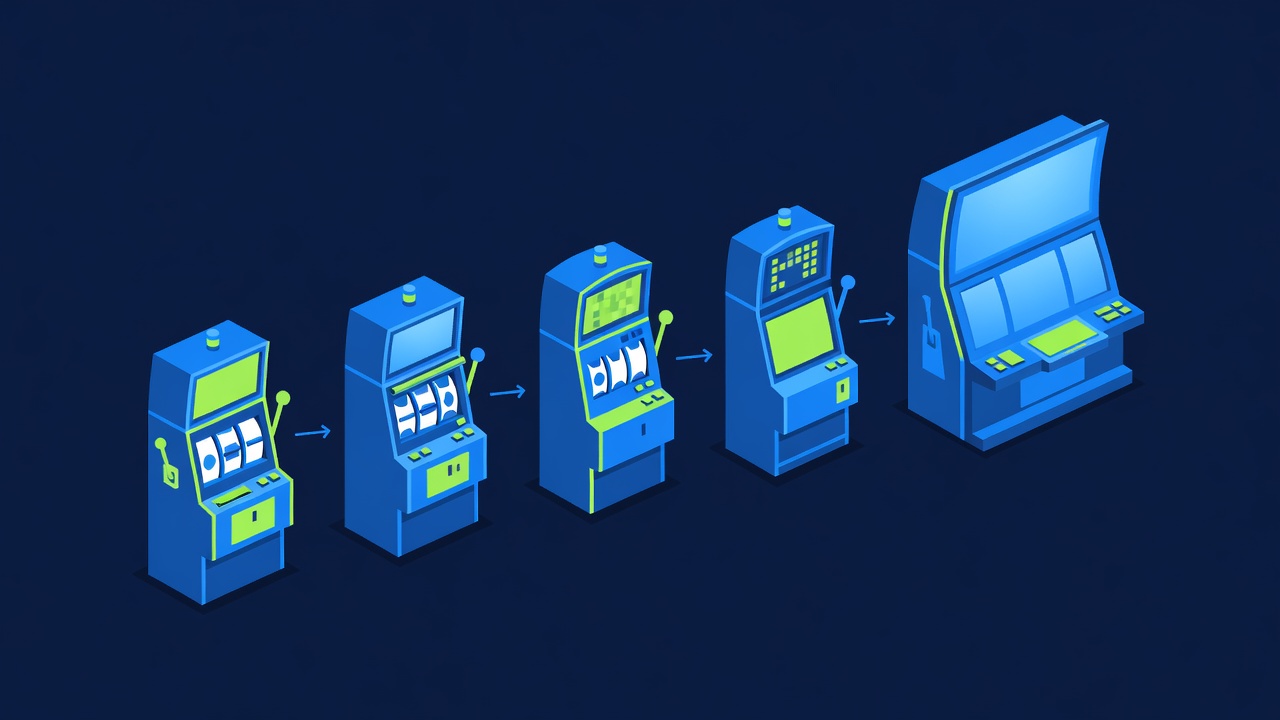
Slot design is applied game design. Take a typical system design: a player inputs currency, the system processes that input through rules, the system outputs a result. The feedback loop is immediate. A player presses a button. The reels spin. The reels stop. The system announces a result. That is the entire gameplay loop. Everything else is juice.
The math comes first. A designer specifies the game's Return to Player percentage (the amount of money the game returns to players over a statistically significant sample). Most casinos require ninety to ninety-five percent RTP. The designer then builds the mechanics that generate that RTP. This is constraint-driven design. You have a target (ninety-two percent RTP). You build the game to hit that target.
The common approach is a paytable combined with a random number generator. The paytable specifies: three red sevens pays one hundred to one. Three bars pays fifty to one. Three cherries pays ten to one. The RNG chooses a random position on the virtual reel for each physical reel. Most physical reels have twenty-two positions. A virtual reel can have twenty-two hundred positions. The RNG picks three of those positions. You hit the position that corresponds to red sevens. You get one hundred times your bet.
The RTP emerges from the probability math. If red sevens appears on one of two thousand two hundred positions, and you are spinning three reels, the probability of hitting three red sevens is (1/2200)^3. That is roughly one in ten point six billion. But the payoff is one hundred to one. Over time, the casino takes more than it gives out. The exact difference is the house edge.
How Game Designers Manufacture Engagement
The loops in a slot machine are: spin, observe, spin again. The goal is to make the time between spins feel short and the observation feel interesting. The most famous retention technique is near-misses: when you almost win. Two red sevens and a bar. You were close. This triggers a response in the player's brain called frustration arousal. You want to spin again to resolve the tension. This is operant conditioning. The game is conditioning you to keep playing.
A secondary loop is the bonus round. After collecting a certain number of bonus symbols, the game enters a free-spins mode. Free spins are retention hooks. They extend play duration without extracting direct money. The designer's goal is to make free spins feel abundant but not overwhelming. Ten free spins feels generous. Five hundred free spins feels rigged. The sweet spot is usually fifteen to twenty.
Volatility is another design parameter. A low-volatility game pays small amounts frequently. A high-volatility game pays large amounts rarely. A low-volatility game keeps players engaged through frequent positive feedback. A high-volatility game keeps players engaged through the possibility of large wins. The design choice depends on target player. A casual player wants frequent small wins. A professional player wants accurate expected-value information and does not care about win frequency.
The most sophisticated element is the bet multiplier. A designer can specify that certain symbols multiply your win. A wild symbol might double all payouts. This creates a secondary decision layer: you need to weight the probability of hitting a multiplier against the base payout. A red seven normally pays one hundred to one. A red seven plus a wild pays two hundred to one. The probability changes. The designer has introduced an element of decision-making into a game that is otherwise determined by the RNG.
The entire structure is designed to create a specific player psychology. You play until you hit a near-miss. The near-miss triggers frustration arousal. You spin again to resolve it. You enter a bonus round. The bonus round extends your session. During the bonus round, you hit a big multiplier. You feel lucky. You are not lucky. You are playing a system that was engineered to produce exactly these feelings at exactly these moments. The system works. The player keeps playing. The casino profits. The designer's job is complete.