The Riverboat Setting
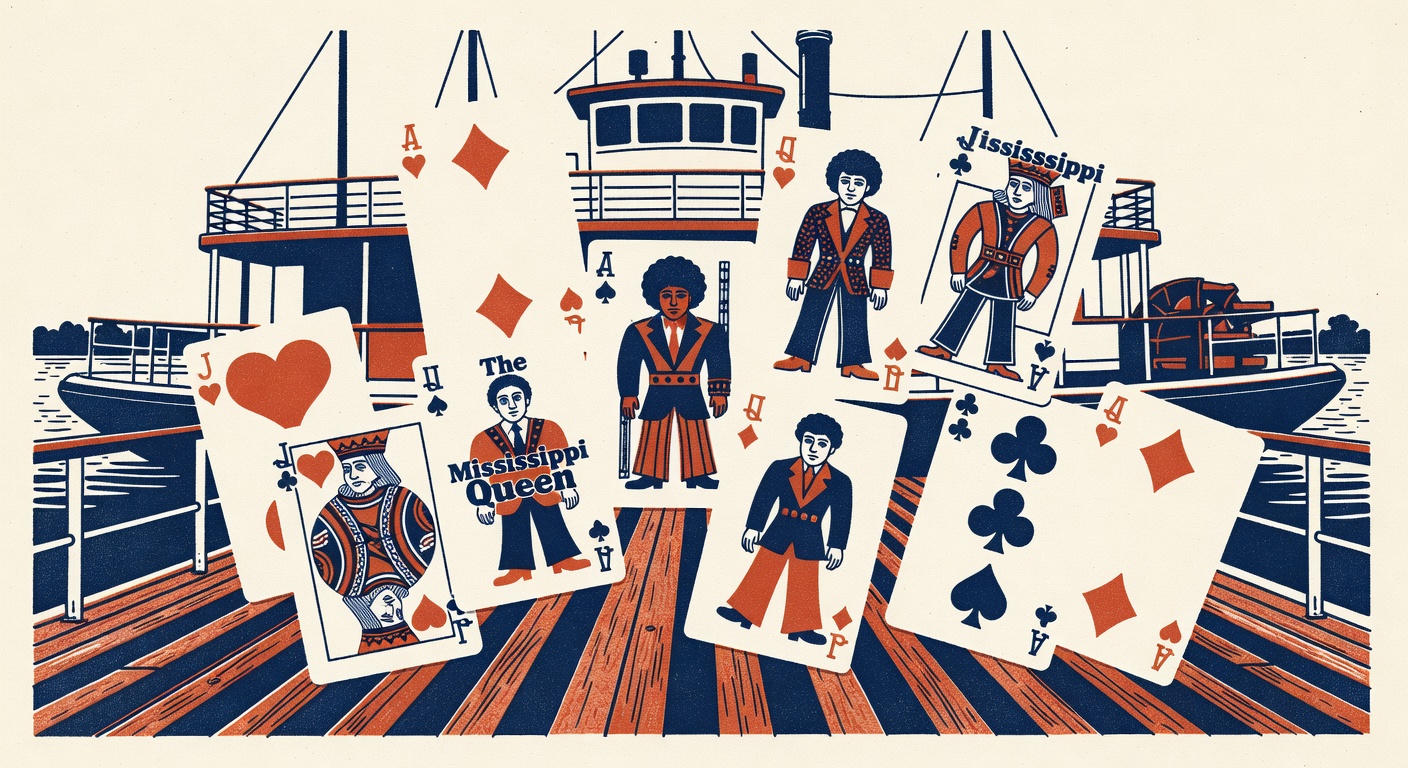
Poker evolved on Mississippi riverboats in the early 1800s. The exact origin is disputed, but most gambling historians point to New Orleans, where riverboat gambling flourished from 1810 onward. Riverboats were moving casinos. They floated from town to town, bringing games to men who otherwise had no access to gambling.
The boats were unregulated. Owners could run any game they wanted. Disputes were settled by men with guns, not by law enforcement. This created an environment where skill, character, and deception were as important as card knowledge.
The Game Itself
Early poker was played with a 20-card deck (fours through aces). Each player received five cards. Betting occurred on those five cards with no opportunity to draw replacements. The game was simple: you either had a strong hand or you did not. Bluffing existed, but it was less developed than in modern poker.
As the game evolved, a full 52-card deck became standard. Draw poker emerged, allowing players to exchange cards. This added complexity. You could represent strength you did not have by drawing cards as if you had a draw. You could trap opponents who were bluffing.
The Value of Reading People
On a riverboat, the player seated across from you was not a faceless AI or an opponent thousands of miles away. He was there. You could watch his breathing, his eyes, his hands. You could see him sweat when he was nervous. You could hear the tone of his voice when he bet.
Poker became a game of psychology. Card mathematics existed, but it was secondary to reading your opponent. A good player knew whether a man was strong or weak based on behavior. This was poker's first edge: understanding human tells before understanding pot odds.
The History of House Edges
Poker games on riverboats took a rake. The house took a percentage of each pot, usually 2 to 5%. This was the origin of how poker is monetized today. The game itself is not against the house (unlike blackjack or roulette), but the house takes a cut for hosting.
This structure created an interesting incentive. The house wanted good games that lasted a long time. A short game with one winner was bad for revenue. A game where money moved between players for hours was good. This meant riverboat operators encouraged skill. Good players attracted other good players. Games lasted longer.
The Mythology
Wyatt Earp played poker. Wild Bill Hickok died with a poker hand in his hand (two pair: aces and eights, now called the Dead Man's Hand). These stories created a mythology: poker as a game where strong nerves and quick judgment meant survival.
The mythology was partially true. Poker players did gamble their lives in some contexts. But most riverboat poker was mundane. Men sitting around a table for hours, betting small money, playing the percentages as best they understood them. The stories of legendary hands were exceptional.
The Transition to Modern Poker
As cities grew and law enforcement improved, riverboat gambling became less necessary. Land-based casinos took over. By the 1900s, poker was played in casinos, saloons, and private games.
The game evolved toward mathematics. Probability became important. Players began to understand expected value. By the 1980s and 1990s, poker became a game where math dominated psychology. Today's best players use solvers and game theory. The reading-people aspect still matters, but it is secondary to range analysis and position awareness.
Yet the psychology never disappeared. Poker is still a game where understanding your opponent matters. The difference is that modern players understand both psychology and mathematics. They use tells as confirmation, not as the primary source of decision-making.
The Legacy
Poker's riverboat origins shaped the game's culture. It remains a game that celebrates individuality and aggression. The narrative of the lone gunslinger remains in modern poker. Players talk about running over tables and making big bluffs.
But modern poker is primarily a game of position, ranges, and pot odds. The gunslinger who plays by feel loses to the computer scientist who plays by calculation. The game has evolved past its mythology, though the mythology still sells the game to new players.