The doubt set in around year six. I was breakeven for that entire year despite knowing I was playing a winning strategy. A year of solid decisions producing zero profit felt impossible. It felt rigged.
I remember the exact moment. I sat down at a six-max table at two in the morning after a ten-hour downswing. I'd lost money on two of the strongest hands I could have. Aces in one, kings in another. Both times, my opponent hit runner-runner straight on the turn and river. I closed the laptop and thought: this is not random. This is manipulated.
I spent three months researching the accusation. By the time I finished, I understood both the answer and why I'd been convinced of the opposite.
How Online Poker Works
Online poker uses a pseudo-random number generator. The RNG produces numbers that determine card sequences. The RNG is seeded by system entropy factors: system time, processor temperature, network latency. The sequence is mathematically deterministic if you know the seed, but unforeseeable if you don't.
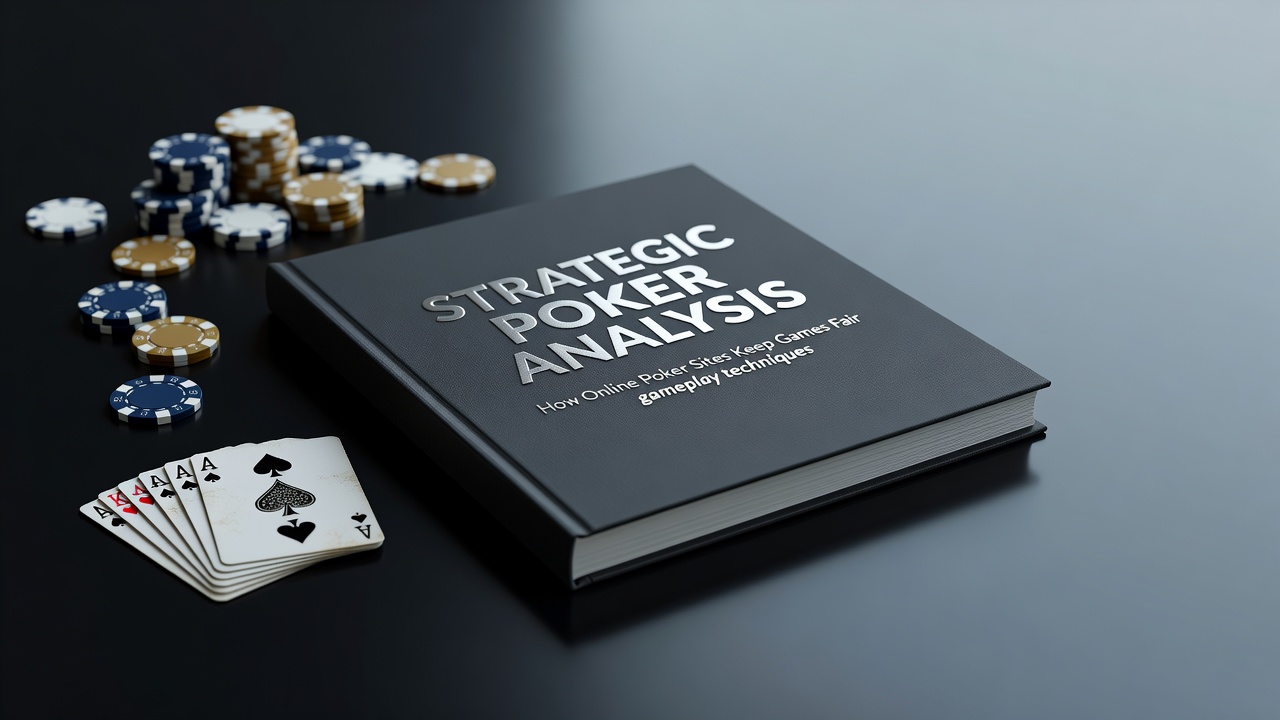
The RNG is tested by independent auditors. PokerStars uses Gaming Laboratories International. Full Tilt Poker (before its closure) used GLI. The audit confirms that the outputs match expected distributions for truly random data.
Third-party auditing is the core control. The poker site could cheat if they modified the RNG, but an auditor would detect the modification. The auditor tests thousands of hands of generated data and verifies that the distribution matches random expectations.
The hands are not dealt one at a time. The entire deck is shuffled at the beginning of each hand. The shuffle is the RNG output. Your two cards are the first two cards from the shuffled deck. The flop is the next three cards. The turn and river follow.
This is theoretically auditable. In practice, you can't audit every hand. You audit the underlying RNG. If the RNG is truly random, the hands are truly random.
Why I Was Convinced Otherwise
Myself and thousands of other poker players convince themselves that online poker is rigged because we misunderstand variance.
Variance is wild in the short term. Poker has high variance because so much is decided by randomness. Even a good hand loses sometimes. A bad hand wins sometimes. Over ten thousand hands, you'll have stretches where you lose on forty percent of your hands. That's within normal variance.
I experienced a year where I played thirty thousand hands and won nothing. The probability of that outcome given my win rate was low. It was maybe a 1-in-50 probability. But 1-in-50 is not impossible. It's just unlikely. Over time, enough people play poker online that someone will be that 1-in-50 person that year.
The human brain is bad at handling variance. We see a pattern of bad outcomes and invent a mechanism. "The site is rigged." It feels true because the bad outcomes feel systematic. They're not. They're random variance within expected bounds.
What Actually Protects Players
The protection is auditing. Sites submit to independent testing. The RNG is verified to produce random outputs. The only way to cheat would be to modify the RNG specifically for certain hands, which the auditing would detect.
The secondary protection is competition. If PokerStars was rigged, players would leave for Full Tilt Poker or other sites. The sites compete on player trust. Cheating would destroy that trust.
The third protection is basic mathematics. If the site wanted to rig games, they'd need to know which hands would be favorable to which players before the hand was dealt. They'd need to tell the RNG to produce that specific sequence. This is possible in theory but operationally difficult. And auditable.
The Real Issue
Online poker is fair in the sense that it's genuinely random. But it's not necessarily profitable for you. The site takes a rake. You're competing against better players than you think. Your strategy has leaks you don't see.
I thought the site was rigged. Actually, I was making subtle strategic mistakes that compounded over time. I was overestimating my edge. I was playing too many marginal hands. I was making poor bankroll decisions.
The site wasn't rigged. I was just worse at poker than I thought I was.