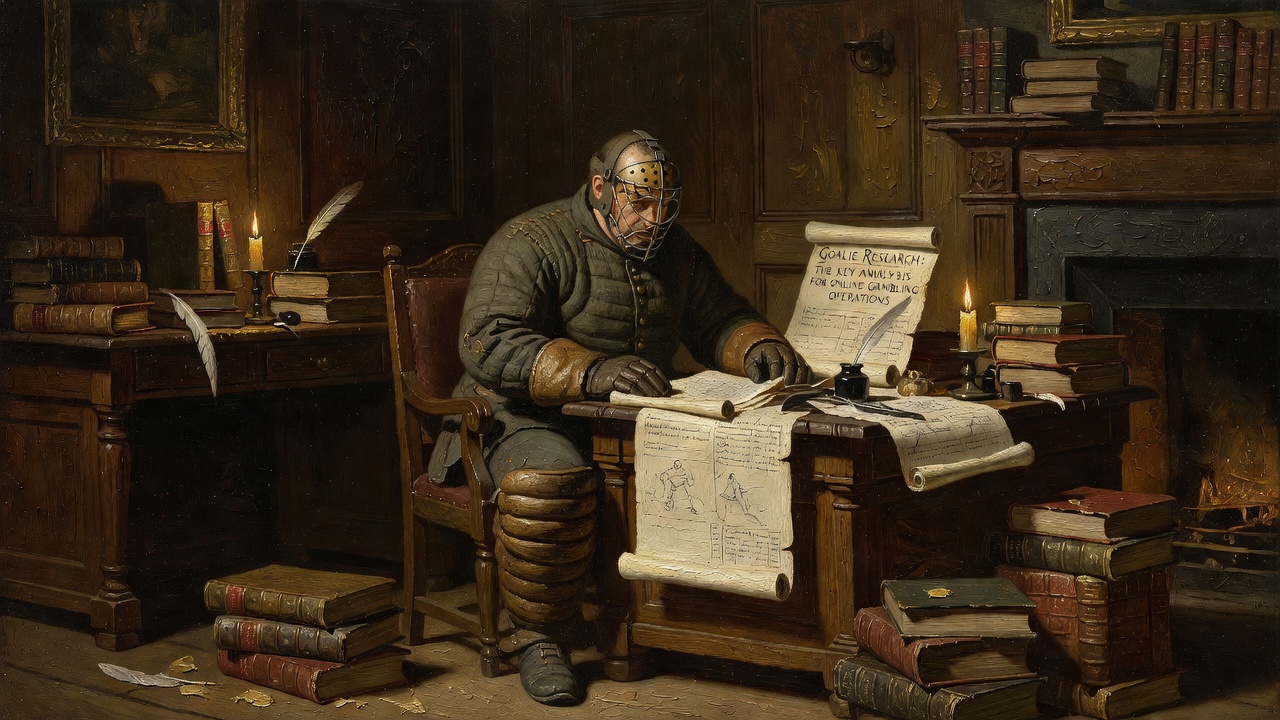
Listen. The dumbest thing a bettor can do is bet on an NHL game without knowing which goalie is playing. The second dumbest thing is knowing which goalie is playing but not knowing how many games the goalie has started in the last seven days.
A starting goalie who played last night is more likely to be tired tonight. A tired goalie makes more mistakes. More mistakes means more goals. More goals means the team loses by more. This is not rocket science, it is ice hockey.
Erik Karlsson is the best defenseman in hockey. If Karlsson plays all three games in a back-to-back-to-back, his team is not significantly worse. Goalies are different. A goalie who plays all three games will be exhausted. His save percentage will drop from his season average of 92 percent to something closer to 89 percent.
The Backup Goalie Situation
When a team loses their star goalie to injury, the backup takes over. The backup is usually worse. But the backup is also usually fresher. A team that has to use their backup for three consecutive games might actually perform better in game three because the starter is now rested and ready to return.
The market does not always price this in. Sportsbooks set the line based on pre-existing team records and reputation. A team with a 50-win star goalie now starts their backup. The line assumes the backup is slightly worse, maybe 2 percent worse. But the backup is playing fresh legs while the star would have been exhausted. The actual team strength might be higher, not lower.
The goalie back-to-back situation is the clearest market inefficiency in hockey betting. It is simple to quantify, it is easy to track, and the market consistently undervalues fresh goalies.
The Rest Advantage
Research by Harvard Sports Analytics shows that a goalie playing on one day of rest has a save percentage approximately 1.5 percentage points lower than the same goalie with two days of rest. One and a half percentage points over a typical game of 30 shots is about 0.45 additional goals against.
If the line is set at 5.5 total goals and the goalie is tired, the actual expected total might be 5.95 goals. A bettor who bets the over in this situation has positive expected value.
This requires tracking. A bettor needs to know the goalie's performance profile. A goalie named Vasilevskiy might have a 92 percent save percentage on rest but only 90 percent on back-to-back. Another goalie might not show much difference. The tracking matters.
The Implementation
Before placing a hockey bet, check the injury reports. Find out which goalie is starting. Check the team's schedule. Is this the goalie's second start in two nights? Is the backup getting a chance? Has the goalie played the last three games?
Adjust your expectations accordingly. A superior team with a tired goalie might lose to an inferior team with a rested backup. This is not an upset in the true sense. It is the expected outcome given the circumstances.