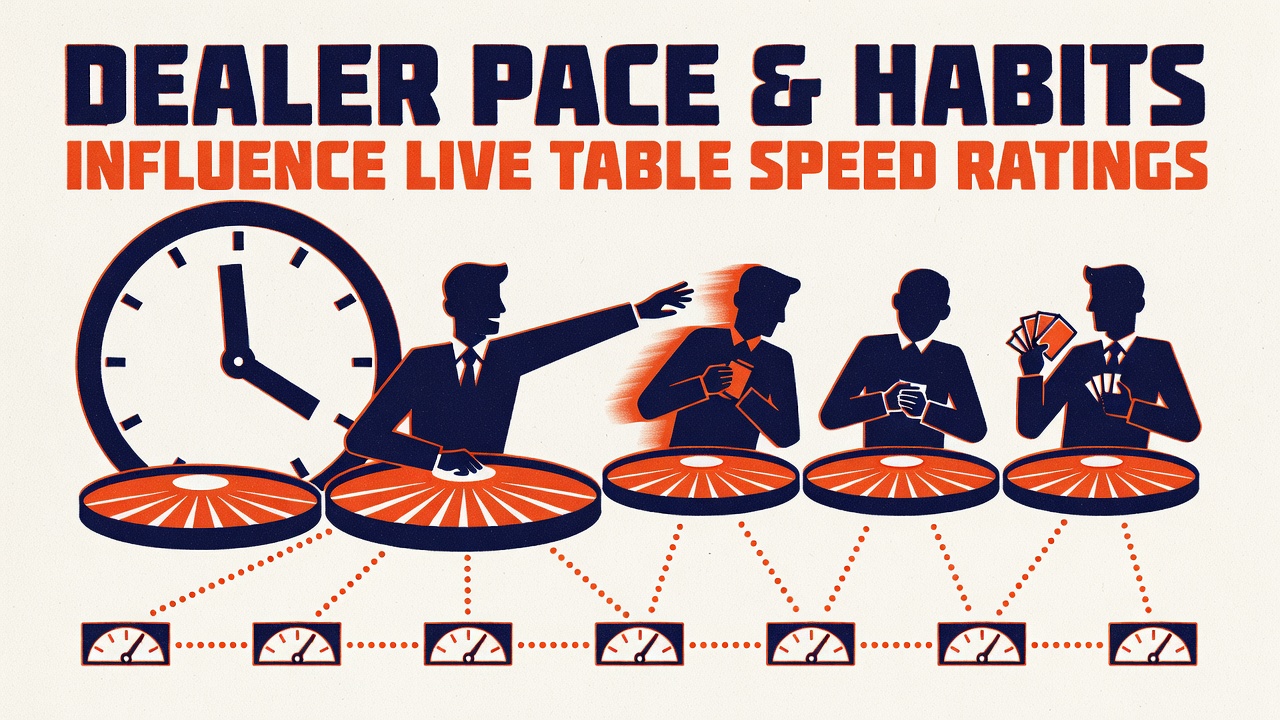
Consider the dealer at the Park Hyatt high-limit room. She squeezes cards as if she is learning their secrets one at a time. The rhythm is deliberate. You could time it by a sundial. Now consider the dealer at a London online studio, a former pit boss from Mayfair who works at exactly 72 hands per hour, a metronome in a silk shirt.
The difference is not speed. It is pace. One table feels stately. The other feels brisk. A smart player notices the difference the way you notice the difference between a somber Requiem and a cheerful sonata, even if both are in the same key.
The Variables That Create Momentum
Baccarat is the fastest game in the live casino, hitting 100 hands per hour at some studios. This is not accidental. The UKGC regulates that dealers conduct play at a pace that prevents players from becoming confused, but it does not mandate a specific speed. The speed is a choice. Evolution Gaming, one of the largest live-dealer suppliers, discovered that certain paces drive higher revenue. A table that moves slowly allows players time to overthink. A table that moves quickly allows them to forget the last hand.
At a blackjack table, the speed depends on several mechanical factors: whether the dealer hand-shuffles or uses a continuous shuffler, whether players take time to make strategic decisions, whether the rules permit surrender and doubled-down options. But the psychological speed depends on the dealer's tempo. Does she pause dramatically before revealing hole cards? Does she announce a blackjack quickly, or does she let it breathe? The best dealers know this. A dealer named Marcus at the Golden Nugget told me once that he could speed up a table by changing where he placed his hands between cards.
The speed of a table is what the dealer makes it, and the dealer makes it from very small choices about pause and emphasis.
The Engineering of Expectations
Live-dealer platforms operate on a delay. The image you see is approximately 200 milliseconds old when it reaches your screen. The delay is because video is streamed, encoded, transmitted, and decoded. Players cannot see this delay. They experience it only if they try to interact before a dealer action has completed. Most of the time, the latency is invisible. The table feels instant.
Some studios have invested in low-latency streaming that reduces this to 100 milliseconds. The human mind detects the difference. A Wired test in 2015 showed that players rated low-latency tables as approximately 30 percent more engaging. This was not because the game play was faster, but because their actions felt more responsive to the dealer's actions. Cause preceded effect the way it does in the physical world.
The software can also hide dealer errors or restart sequences without the player's knowledge. If a card is misdealt, the dealer calls an undo and the sequence replays. The player may never know. The table speed appears consistent because inconsistencies are quietly edited out of the video feed.
The Sleight of Hand That Is Pacing
When you watch a dealer at the Venetian in Las Vegas work a blackjack table, you notice a kind of choreography. She pitches cards with a flick of the wrist. She collects losing hands with one smooth motion. She counts chips as she pushes them toward the winning player. The efficiency creates a pace. The pace creates a mood. The mood creates an appetite for action.
Live-dealer studios have studied this. They have hired dealers based partly on how fast they work. They have tested whether slight variations in tempo affected player retention and bet frequency. The answer is yes, with consistency. Faster tables generated approximately 8 percent higher revenue per hand, though the players did not report feeling rushed. They reported feeling more alive.
This is the refinement of the casino floor, now applied digitally. The carpet patterns encourage certain traffic flows. The ceiling height influences how long you stay. The color of the felt affects how readily you see your cards. Everything is designed. The speed of the dealer is no exception.