Standard blackjack rules allow doubling down on the first two cards. A player receiving, say, eleven points can double the bet and receive one additional card. A player receiving six and five can double to eleven. This is valuable because eleven is the most likely point total to win when drawing a single card.
Many casinos restrict doubling to specific point totals. Las Vegas casinos often allow doubling on ten or eleven only. Atlantic City traditionally allowed doubling on any point total. This variance matters significantly for expected value calculations.
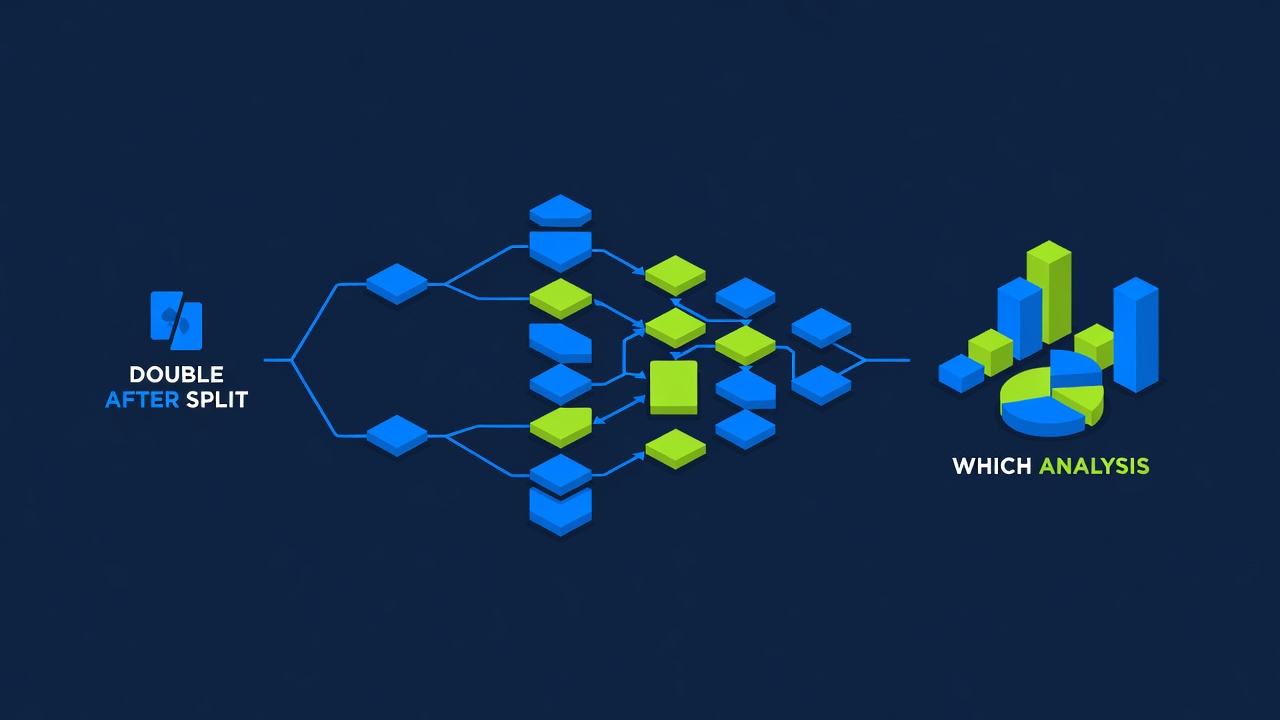
Double-after-split (DAS) refers to the ability to double down on the first hand after splitting a pair. A player dealt 8-8 can split to two eights. If the first eight receives a three (making eleven), DAS allows a double down. This is powerful because the player is now operating with the strongest possible doubling opportunity: eleven points with proper timing.
The Mathematics Underneath
Consider the specific scenario: player has 8-8 against dealer's upcard 6. Pure basic strategy dictates always splitting eights. But what happens post-split? First card is a three (now 8-3, total eleven). Under DAS, the player doubles. Without DAS, the player can only hit (or stand, though this is rarely optimal).
Over a thousand hands, DAS versus non-DAS creates approximately 140 basis points of expected value difference in the player's favor. For a player making one hundred dollar bets, that's roughly one hundred forty dollars per thousand hands. The casino offering DAS has therefore reduced house edge by approximately 0.14%, which is directly lost profit.
"Rules that allow doubling after splits shift maybe 0.14% of expected value to the player. This seems small until multiplied across millions of hands annually."
Other rule variations compound this. Soft hand doubling (doubling on ace-two through ace-eight combinations) adds approximately 0.13% player edge. Early surrender (the ability to surrender the hand before seeing the dealer's hole card) adds 0.62% player edge. A blackjack paying 3:2 instead of 6:5 adds 1.39% player edge.
The cumulative effect is substantial. A casino offering DAS, soft hand doubling, late surrender, and 3:2 blackjack payoff has house edge of approximately 0.5%. A casino offering no DAS, no soft hand doubling, no surrender, and 6:5 blackjack payoff has house edge of approximately 2.5%. Over a million hands, this is a difference of twenty thousand dollars in profit that the restrictive casino captures.
From the player's perspective, DAS is not optional. Basic strategy changes based on whether DAS is available. If DAS is available, the player doubles on more hands post-split. If DAS is not available, the player must adjust strategy, often hitting instead of doubling, which reduces expected value relative to the DAS world.
Casino implementation of DAS varies by geography and table limits. High-limit tables in Las Vegas more commonly offer DAS because high-limit players demand favorable rules. Low-limit tables and machines dealing single-deck often restrict DAS because the casino assumes casual players won't notice or won't adjust strategy accordingly. This is often true. Many casual blackjack players play the same basic strategy regardless of rule variations, leaving money on the table.
Online casinos typically offer DAS because the rules are simply variables in the software. There is no difference in operational cost between DAS and non-DAS. The casino sets rules to attract players, and DAS-available games attract stronger players who value the correct odds.
For serious players, checking the rules before playing is mandatory. The question is not whether to play blackjack. The question is which version of blackjack to play given the available rule sets. A rule comparison that includes DAS, soft doubling, and a 3:2 payout is obviously superior to a version without these. The house edge difference is material across meaningful play volume.