I remember when the Resorts Casino on the boardwalk opened in nineteen seventy-six. No card readers. No verification. You brought money. They took it. Simple. The world got complicated. Now you cannot deposit without proving you are who you say you are. The crypto casinos added a new layer to this. You have to prove you own your wallet. You have to prove your wallet address matches your account. It is not the boardwalk anymore. It is a filing system.
Live dealer casinos that accept crypto have a standard procedure. I have watched it happen hundreds of times. A player opens an account. They verify their identity. Driver's license. Proof of address. A utility bill. The same documentation the government wanted from me when I tried to open a bank account in nineteen ninety-two. Casino regulations moved toward banking regulations. Crypto casinos moved faster because they have less regulatory standing.
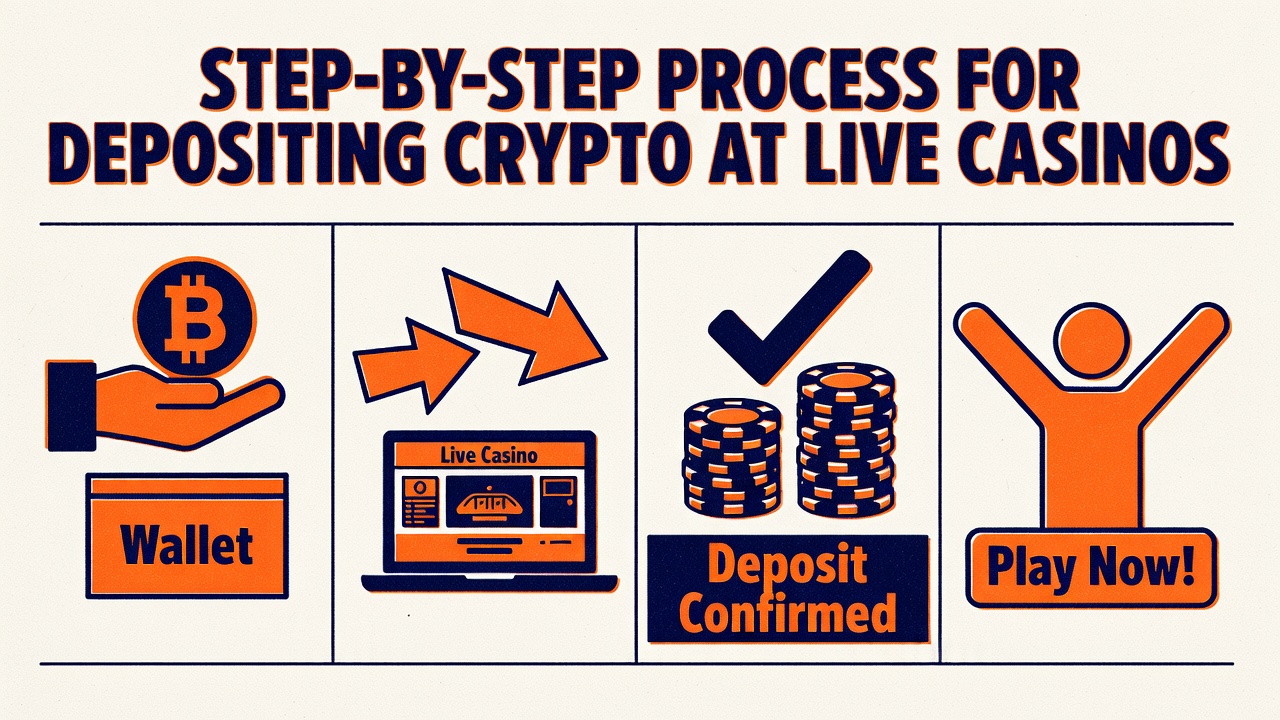
Once your identity is verified, you select your deposit method. Most live dealer crypto casinos offer Bitcoin, Ethereum, and Tether. Some offer other coins. You select one. The casino generates a deposit address specific to your account. This is a unique identifier. Think of it like a bank account number. Your crypto wallet (MetaMask, Ledger, Coinbase) sends funds to this address. The blockchain processes the transaction. It takes anywhere from thirty seconds to thirty minutes depending on network congestion.
The Verification Mechanics
The casino monitors the blockchain address you provided. When coins arrive at that address, the casino recognizes them. The coins are converted to account credit at the prevailing exchange rate. If Bitcoin was thirty thousand dollars when you sent the transaction and thirty-one thousand when it arrived, you get converted at the rate the casino recognizes the deposit. Most casinos lock in the rate when they receive the transaction.
Where crypto differs from traditional deposits is that it is pseudonymous but traceable. Your deposit address is public. Anyone can see that coins went from a certain address to the casino's address. But they cannot see it is you unless you told them. The casino can see it is you because you provided the address. The chain of custody is unambiguous. From your wallet to the casino. No intermediary. No bank. No processing delay.
This is why casinos accept crypto. It removes the banking layer. A traditional casino that wants a card deposit needs to work with payment processors, issuing banks, and regulatory agencies. A crypto casino deposits straight from your wallet to their wallet. The settlement is final. They cannot reverse it (unlike card transactions). They cannot have it blocked by a payment processor (like when a bank decides casinos are high-risk).
The downside is that if you send the coins to the wrong address, they are gone. Permanently. I watched a man deposit five hundred dollars in Bitcoin to a typo address in two thousand and twenty. Five hundred dollars. Gone forever. The casino cannot retrieve it. The address is not theirs. It is some other address that may not even exist. This is why crypto casinos now require you to send a test deposit first, confirm that it arrives, then send the full amount. They learned from years of customer support complaints.
Once the deposit confirms, you can play immediately. This is the advantage. A card deposit takes three business days. A crypto deposit takes minutes. You go from empty wallet to seated at a live table in under ten minutes. The boardwalk used to be like this. Just faster now. And more complicated. And more verifiable. Atlantic City got bureaucratized. Crypto casinos are trying to stay simple while still staying legal. So far they are failing at the simplicity part.