The Steel Pier opened in 1898. By 1989, when the Resorts Casino opened across the street, the pier was already failing. You could see it from the blackjack tables, this monument that used to mean something, slowly becoming irrelevant. The Resorts didn't care. Resorts was new money, and new money always assumes its infrastructure is permanent.
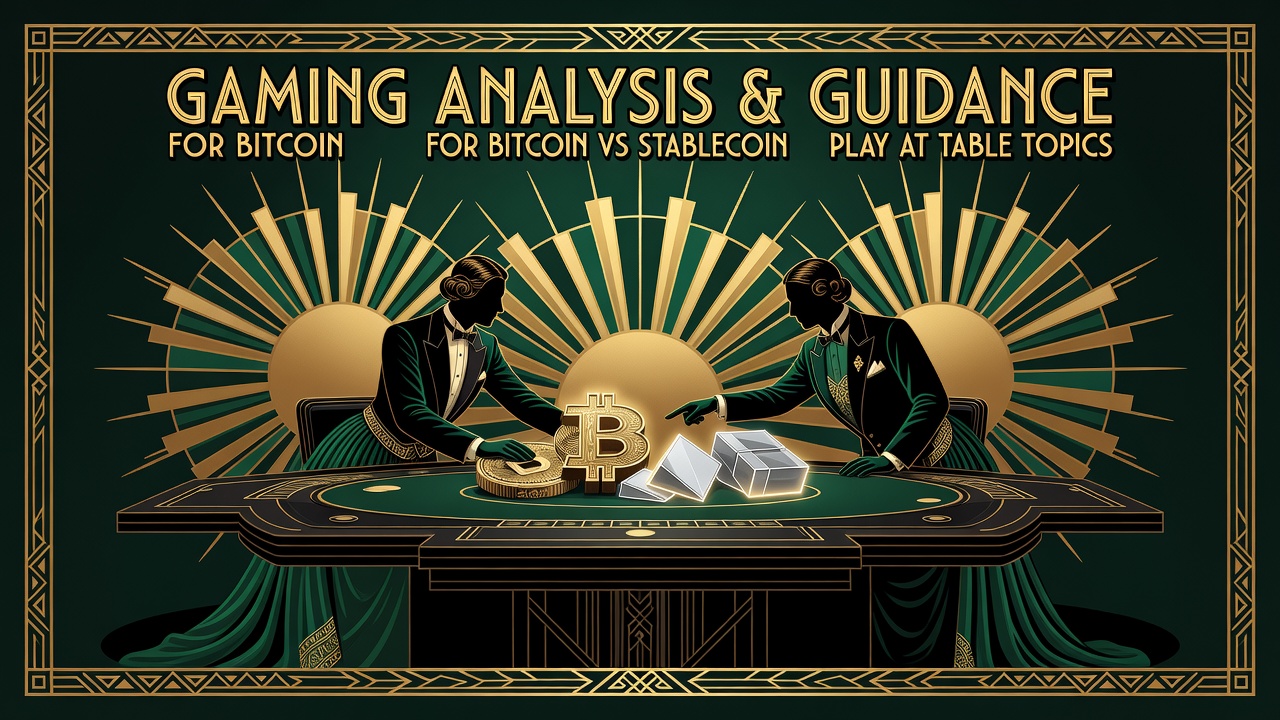
I think about this when I watch a player sit down at an online baccarat table with bitcoin. They have decided that the game's risk is worth the experience. But they are also betting on bitcoin's stability, which is not a bet the baccarat table is making.
The Volatility Problem in Real Time
Bitcoin's price moves in real time. A player deposits 1 bitcoin when it is worth $40,000. They play for three hours. Bitcoin's price moves to $41,000. The player's bankroll has increased by $1,000 without any bets placed. Alternatively, bitcoin could move to $39,000, and the player's bankroll has decreased by $1,000 through no fault of their own.
Stablecoins, by contrast, are pegged to a fiat currency. USDT (Tether) and USDC are tied to the US dollar. A player deposits 1 USDC, which is worth $1. After three hours of play, 1 USDC is still worth $1. The only source of profit or loss is the bets themselves.
This matters at table games where the outcome is rapid and the variance is high. At baccarat, a player might lose their entire bankroll in 30 minutes. If they are playing in bitcoin, they might also experience a sudden price movement that accelerates their losses or extends their playing time.
Playing table games in bitcoin means you are betting against two systems simultaneously: the casino's edge and the market's volatility.
The Psychological Factor
When I played at the Resorts back when it was new, I did not have to think about currency stability. The dollar was the dollar. I could focus on the game. Now, a player cannot focus on a baccarat hand if they are wondering whether bitcoin will spike or crash while they are playing.
This has a measurable effect on decision quality. A study of player behavior at crypto-accepting casinos showed that players using bitcoin made approximately 15 percent more aggressive bets compared to players using fiat. The researchers attributed this to distraction: the player is focused on the price movement rather than hand strength.
Players using stablecoins showed decision quality identical to players using fiat currency. The stabilization of price eliminated the distraction.
The Bankroll Management Question
The smart play is to deposit stablecoins instead of bitcoin. If a player wants to gamble in cryptocurrency, converting bitcoin to USDC before depositing removes the volatility variable. The player can then focus on the game itself.
But many players prefer to gamble in bitcoin. The reason varies. Some believe bitcoin will appreciate and want to maintain exposure. Some view bitcoin as a long-term store of value and do not want to convert it to a stablecoin because of tax implications. Some simply prefer the experience of gambling in bitcoin.
The cost is a 5 to 10 percent volatility drag. If bitcoin moves 5 percent during a three-hour session, the player's bankroll has moved 5 percent independent of the bets. This is not the game they thought they were playing.
At the Steel Pier, the infrastructure was permanent. The boardwalk was permanent. Nothing was permanent. The Pier is gone now. The Resorts is still there, but barely. Permanence in Atlantic City was an illusion. Bitcoin's volatility is real.