The typical customer walks into a sportsbook thinking that if everyone is betting a team, the team must be good. The sportsbook is actually protecting itself from being overexposed on that team. When public cash comes flooding in on one squad, the bookmaker shortens their odds or lengthens the opponent's odds. The spread expands against where the public is putting their bankroll. This is normal line movement.
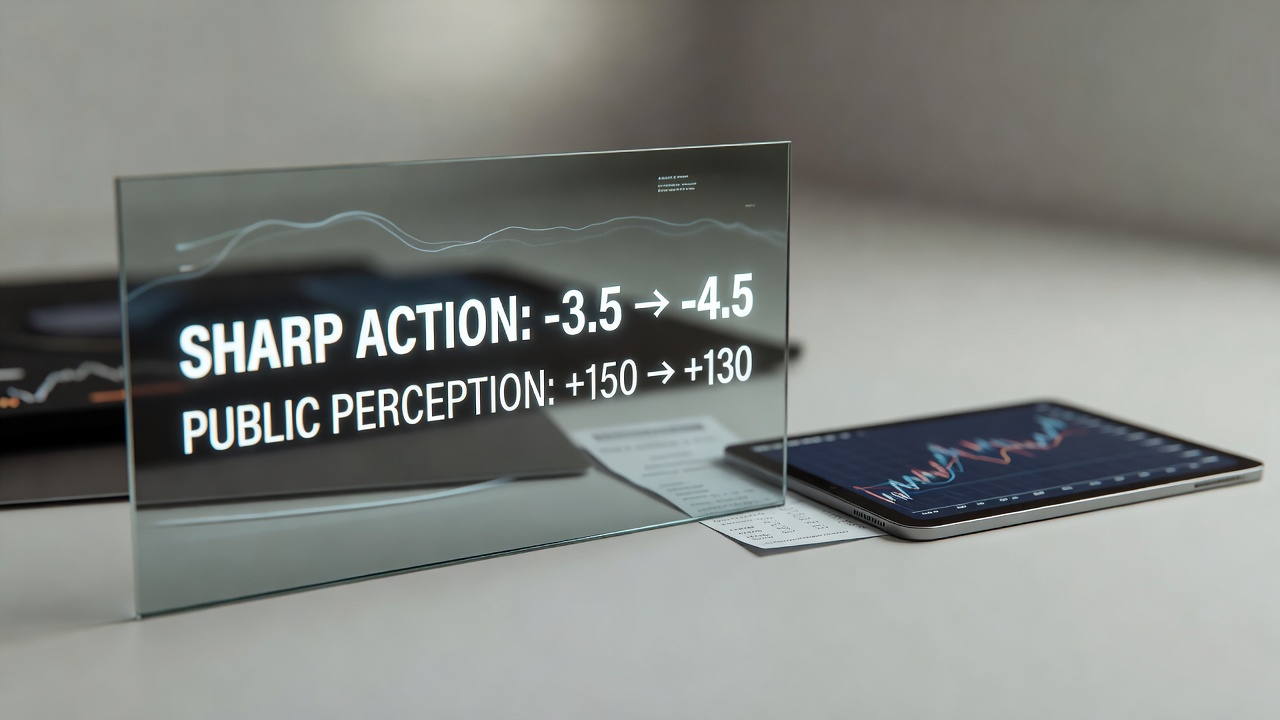
But there exists an inversion. The spread opens at Patriots minus-six. During the day, money floods in on Patriots. The spread gets longer: Patriots minus six-point-five, minus-seven, minus-seven-point-five. The public wants Patriots. The line punishes Patriots bettors. This happens constantly.
Then there's the opposite scenario. Patriots minus-six opens. Heavy action hits on New England. Yet somehow the line drifts toward Miami: minus-five-point-five, minus-five. This is backwards from what should occur if market dynamics worked normally. The sportsbook should be incentivized to take Patriots money because the public is chasing them. But the line is actually shortening. Why.
The answer: professionals were already on New England during the night or early morning. The sportsbook accepted significant New England liability from sophisticated bettors. Now the sportsbook has a full book on Patriots and needs Miami exposure to balance risk. When the public tries to put money on New England later in the day, the sportsbook does not want more New England money. They move the line to suppress it. The line shortens against the public's preference. This is reverse movement.
The Signal of Sharp Action
Professionals move money when they identify an edge. An edge is a pricing mistake. The professional believes New England is worth minus-six-point-five but the market is showing minus-six. They wager. They take down supply. They accumulate position. By the time the public arrives later in the day and wants to back New England at minus-six, the sharp side is already stocked. The sportsbook is balanced. They suppress further demand through pricing.
Tracking reverse movement is one way to piggyback on professional thinking. You notice the line is unstable relative to the cash flow. You infer that sharp money moved it. You consider following the sharp money. Over samples of one hundred-plus contests, bettors who follow reverse movement outperform bettors who follow public sentiment. The difference is modest (two to three percent edge) but consistent.
The mechanics require access to real-time data. You need opening line. You need current line. You need percentage of public money on each side. DraftKings, FanDuel, and Caesars all publish these statistics during games. You can track when the line moved opposite to public percentages. When this occurs, you have identified reverse movement.
The weakness: professionals do not always move money. Some games have consensus among sharp bettors. Some games have no advantage. On those contests, reverse movement does not manifest because sharp money is absent. You cannot assume reverse movement exists everywhere. You must identify specific instances where it is happening.
The opposite mistake: assuming that absence of reverse movement means public money is correct. Sometimes the public and professionals agree. On those occasions, no reverse movement happens because money flows in the same direction. Professional consensus and public preference can overlap.
Reversal line tracking is useful for players who are trying to exploit inefficiencies. For casual bettors trying to make entertainment wagers, the relevance is limited. But for anyone taking their wagering seriously, recognizing when sharp money has already committed is critical information about market state.