You walk into the Sportsbook. The Australian Open line is posted. Djokovic is minus 300. Sinner is plus 240. The favorites always feel safe. The narrative says: back the best player, the one who has won the most. But the narrative is not the same as the payout.
Grand Slams are four tournaments a year. Long format. Multiple matches over two weeks. The physical and mental grind separates contenders from also-rans. The favorite-based pricing you see accounts for recent form, but it does not always account for fatigue, for mental state, for the specific draw.
Let me give you the structure. In a best-of-five match tournament, variance is higher than in a best-of-three format. A player who is favored to win 55 percent of a two-set match might only be favored to win 52 percent of a three-set match. The longer format gives the underdog more opportunities.
The public does not price this correctly. Public money loves the favorites. Everyone wants to back Djokovic because Djokovic has won everything. The sportsbooks adjust their lines accordingly. By the time you get to match day, the favorite is often overpriced relative to the actual probability.
Take 2022's Australian Open. Djokovic was deported before the tournament. Medvedev was the consensus favorite. His line to win the tournament was around minus 150. That implied a 60 percent probability. Medvedev was obviously a strong player. But was he 60 percent likely to win a four-tournament cycle? The answer, in hindsight, was no. Nadal ended up winning the tournament. Medvedev's playoff line was too short.
The value in Grand Slams is typically in the tournament winner markets, not the match markets.
Match-by-match, the lines are efficient. The sportsbook knows the head-to-head record. They know the recent form. They know the court conditions. But in a 128-player tournament, the probability that a specific player wins the entire thing is a complex calculation. The public tends to overestimate the favorites' chances because of recent headlines.
A player on a 15-match winning streak looks invincible until they play someone who has studied their patterns. A player coming off an injury might be underpriced if they have had time to recover and their recent matches do not reflect their actual fitness level.
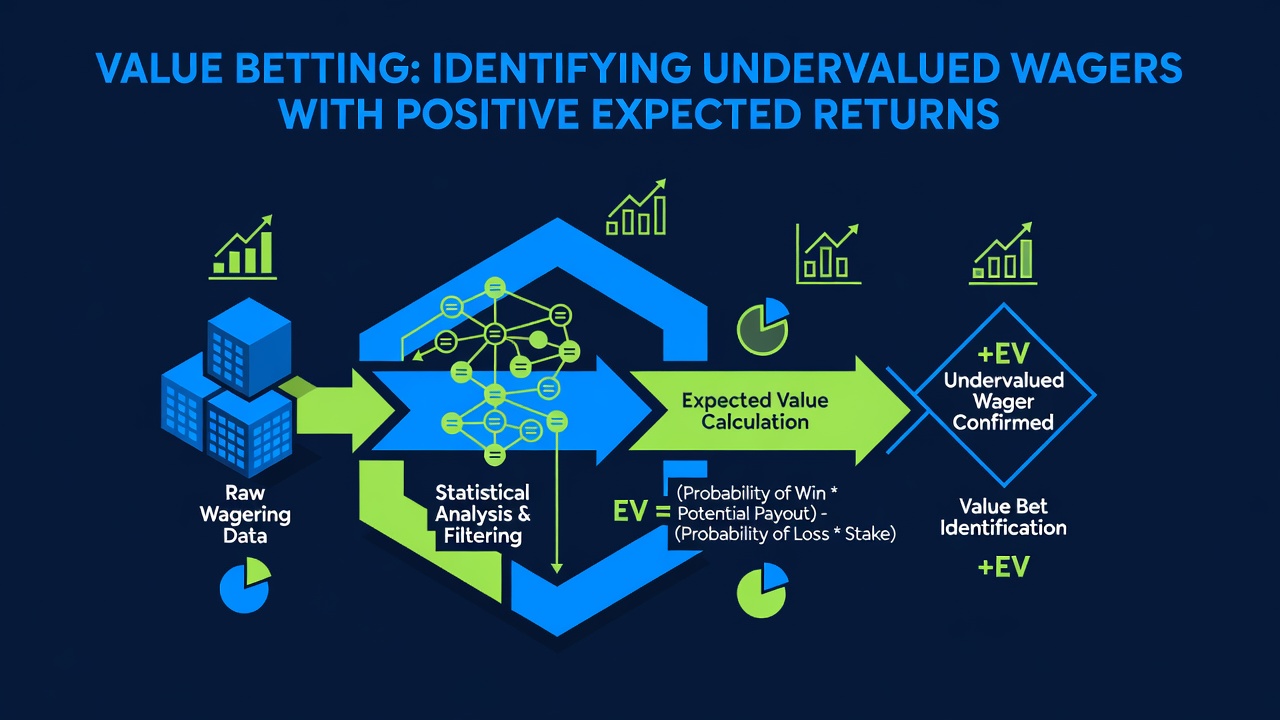
The data says this: if you want to find +EV in Grand Slams, look at players who are:
-
Unseeded or lower-seeded players with a favorable draw. An 8th seed facing a weak quarterfinal draw is often priced as if they have a harder path.
-
Players returning from injury. The public assumes they are still injured. The sportsbooks price accordingly. If the player has had sufficient time to recover, the line might be giving away value.
-
Players with specific skill sets that match the court condition. A player with a big serve gets underpriced on grass. A defensive baseline player gets underpriced on clay.
-
Second-week players in tournaments where the favorite is facing fatigue. If Djokovic has already played two exhausting matches, his line to beat a fresher opponent should be wider, but public money keeps it tight.
The Grand Slams are marathon events. The winners are not always the best players on any given day. They are the players who can stay sharp for two weeks against rotating opposition. The sportsbooks know this. The public does not always price it in.
Here is the practical guidance: track closing line value. After a match, look up what the line was an hour before the match began. Compare it to the closing line thirty seconds before the match. If you had consistent fading power against the closing line, you would have positive expected value.
For tournament winners, the same principle applies, but on a larger scale. Look at which players the public is backing versus which players the sharp money is backing. The sharp money often wins in the long run because the sharp money is looking at actual probabilities, not narratives.
Grand Slam value is not easy to find. These tournaments feature the best players in the world. There is no obvious edge. But there are edges for the bettor who understands that the favorite is not always the best bet, and that the public's attraction to chalk is the sportsbook's greatest advantage.